Presented at the SAIS Academic Support Conference | February 2025
How do we ensure every child becomes a more independent reader? How do we bridge the gap between what we hope our students can do and what they actually need?
These questions were at the heart of our February 2025 session at the SAIS conference, where we had the joy of learning from and with Mary Jacob Harris.
Mary Jacob, one of our Learning Specialists at Trinity School in Atlanta, brings deep expertise in literacy development and data-informed instruction. Her work—supporting students with diagnosed learning differences and partnering with classroom teachers to design diagnostic and prescriptive instruction—provided the foundation for our session: Using Data: Strengthen Reading Independence/Understanding.
This was not a sit-and-get session. We engaged participants in hands-on analysis using anonymized classroom data, active reflection protocols, and collaborative planning routines.
Session at a Glance
Structure:
- 5 min – Purpose and session overview
- 10 min – Reviewing data with curiosity: blind analysis and assumption testing
- 5 min – Tier I data review: whole group patterns
- 20 min – Tier II and III data: decoding needs, targeted support
- 10 min – Turning insight into action: tracking growth over time
- 10 min – Q&A and reflection
Interactive Strategies Used:
- 3-2-1 notetaking
- Think-Pair-Share
- Active Data Reflection Protocol
In rounds, through 3-2-1 note-taking, think-pair-share, and guided data dives, we modeled how teams can use assessment insight to plan responsive, targeted instruction across Tier I, II, and III.
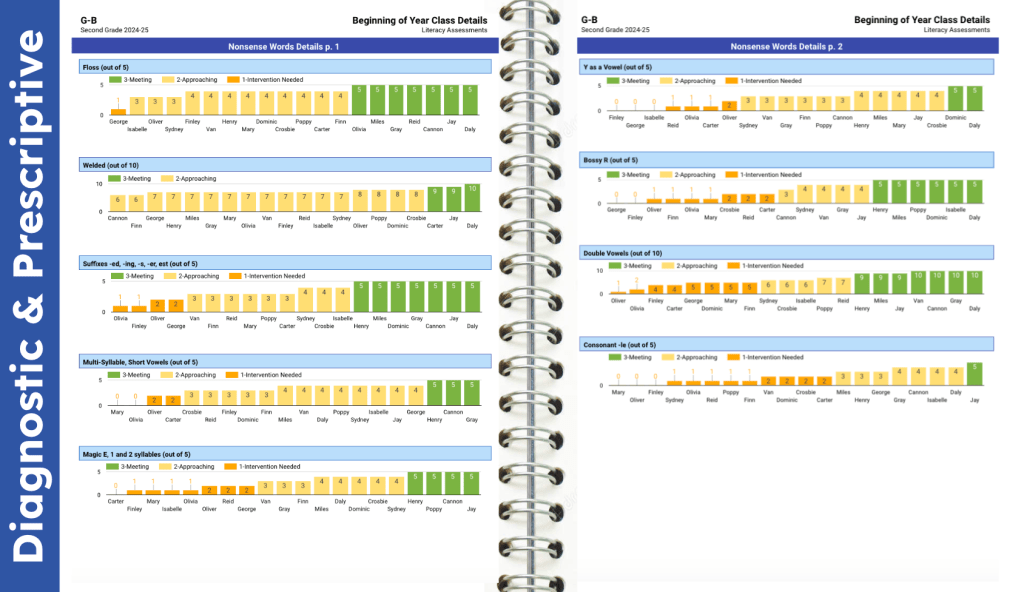
Round 1: Analyze the beginning of the year data to make decisions about core, Tier I instruction.
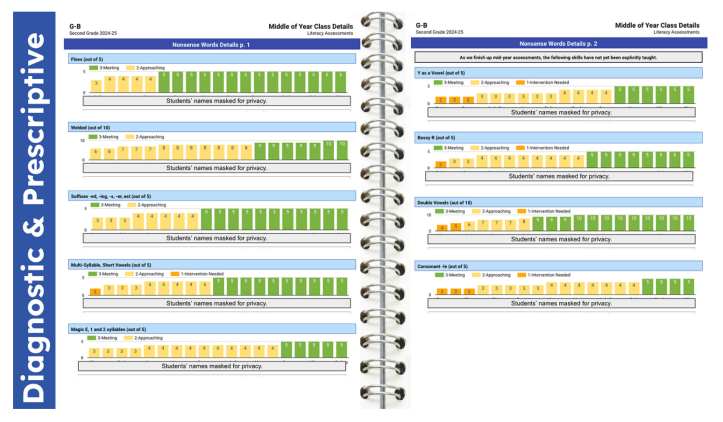
Round 2: Analyze the middle of the year data to make decisions about program impact and additional support needed in differentiated, small-group instruction and possible Tier II support.
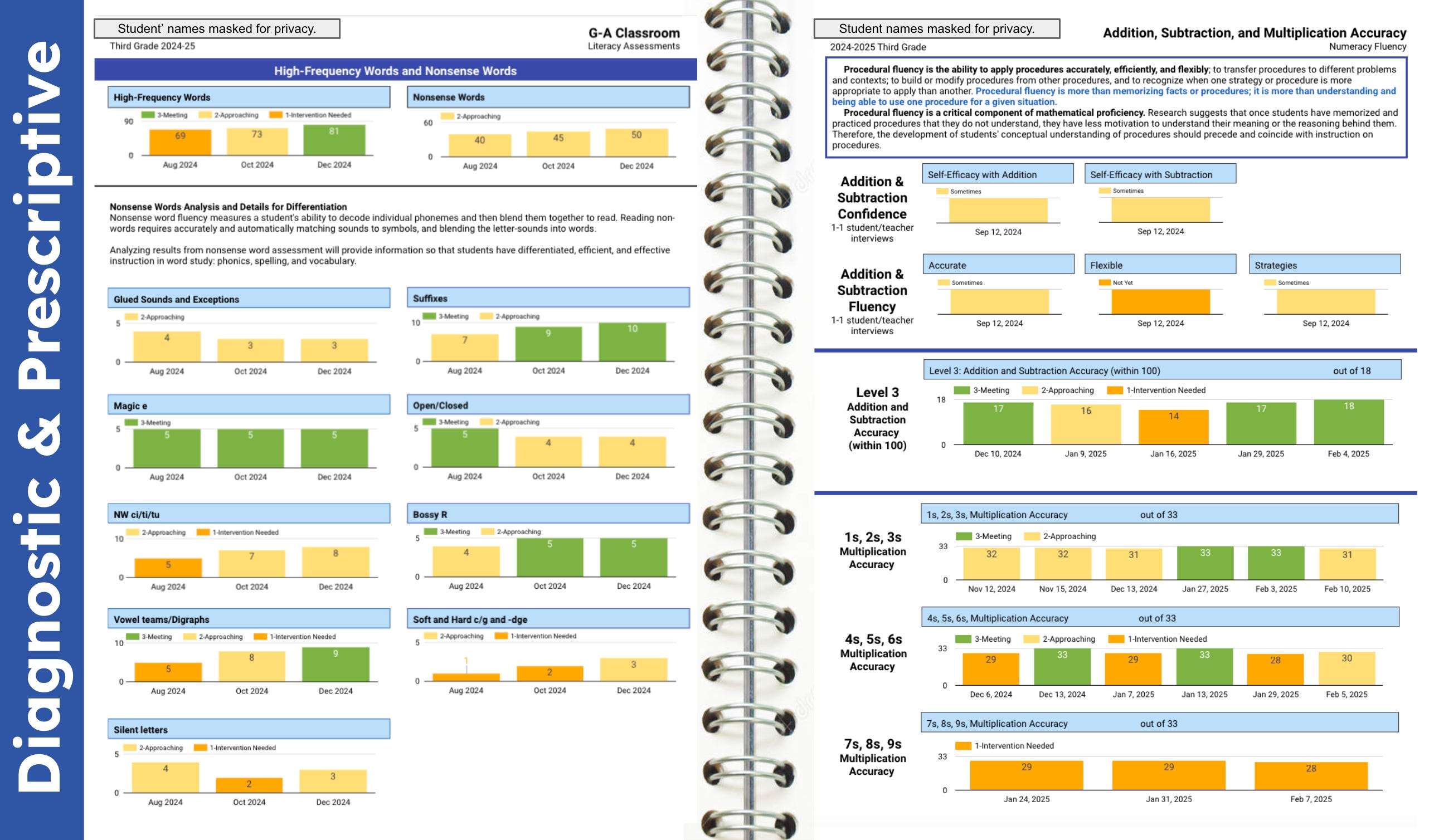
Round 3: Analyze an individual student’s progress over the year-to-date in both literacy and numeracy to make decisions about additional, individualized Tier III support needed.
Mary Jacob’s leadership made the session come alive. Her thoughtful questions, clarity around instructional design, and deep knowledge of literacy practices guided our shared learning. Participants experienced what it looks like to use data not just to sort or label students, but to illuminate what’s possible next.
As Dan Heath reminds us in Upstream, “So often we find ourselves reacting to problems rather than preventing them.” Mary Jacob shows us what it means to work upstream: to notice patterns early, design intentionally, and build student independence through data-informed decision-making.
We are grateful to be part of a community committed to growing readers who understand and thrive.

