STLinATL 2025 | Workshop 2 | Tuesday, March 11, 2025 | 75 Minutes
Co-Facilitated by Jill Gough + Marsha Harris
In every subject, across every grade level, students are expected to write—to express understanding, to communicate thinking, to show what they know. But what if writing isn’t just the end product? What if writing is the learning? What if it’s one of our best tools for formative assessment?
This was the heartbeat of our STLinATL session: an exploration of how The Writing Revolution provides powerful structures for teaching students to write and for uncovering what they understand.
Together with Marsha Harris, we invited participants into a hands-on session designed around one core idea: clear, coherent, evidence-based writing helps make student thinking visible.
Workshop at a Glance
Getting Started with Purpose (5 minutes)
We began by naming our dual goals for the session:
- Writing as a skill that can be explicitly taught and practiced.
- Writing as a tool for formative assessment.
Clarity matters, for our students and for us. We grounded ourselves in that from the very beginning.
Fear of the Blank Page (10 minutes)
So many students (and adults) experience anxiety about not knowing how to begin. The Writing Revolution (TWR) offers sentence-level strategies that lower the barrier to entry and build writing muscle over time. We shared core principles from TWR and wrote together, showing that no matter your subject or grade level, these routines are accessible and powerful.
Sentence Kernels (20 minutes)
One of our favorite entry points. Sentence kernels are short, content-rich statements that students can manipulate in different ways: combining, expanding, and reordering. Each move requires thinking. As teachers, we can listen in or review their responses to gain a snapshot of understanding.
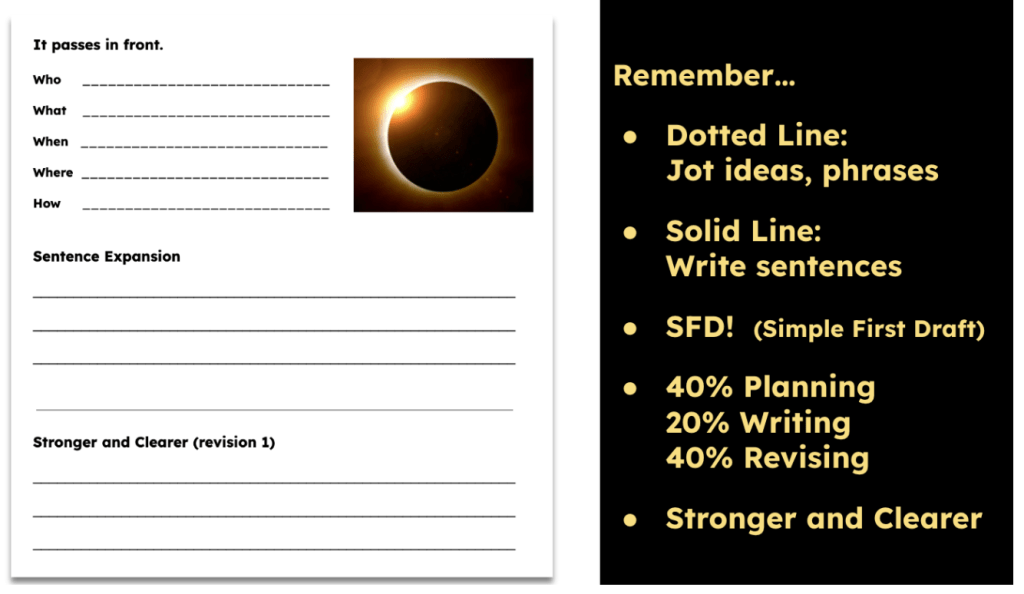
- Do students know the key ideas?
- Can they distinguish between details and main ideas?
- Are they connecting content-specific vocabulary with meaning?
Formative assessment, built right into the writing.
Appositives as a Tool for Comprehension (20 minutes)
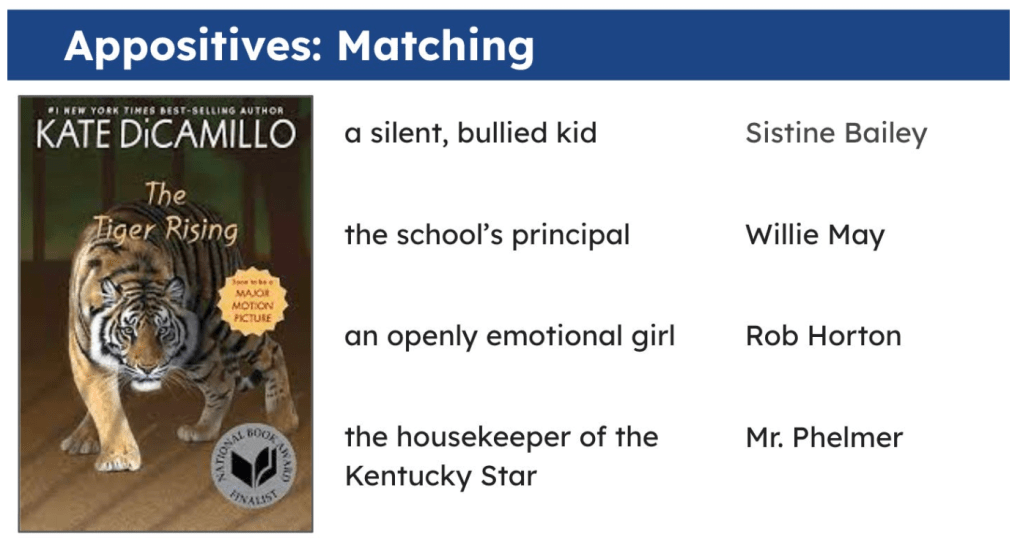
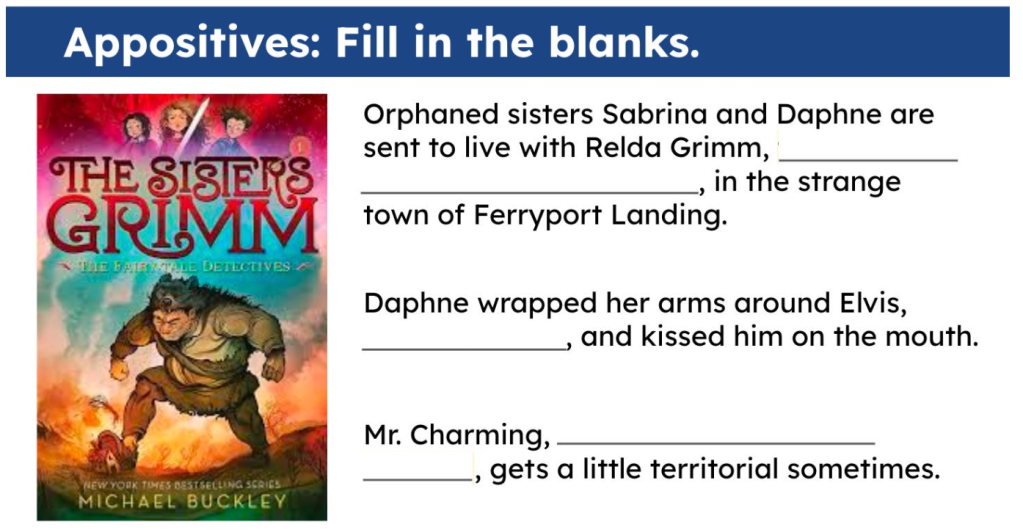
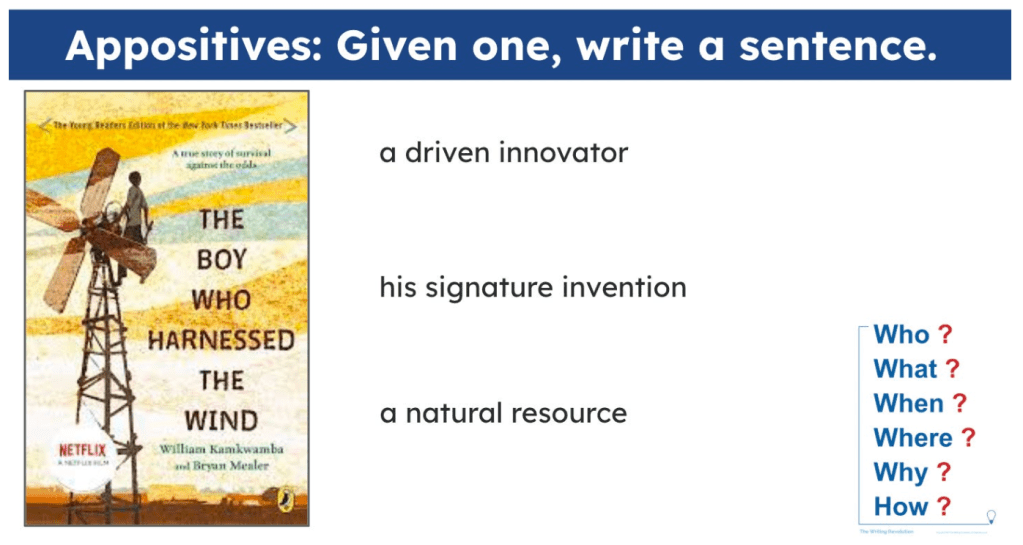
We zoomed in on appositives—not just as a grammar feature, but as a strategy for making meaning. Students use them to clarify and add information. When students can insert an appositive that is both accurate and meaningful, it signals comprehension. When they struggle, we know exactly where to reteach or revisit content.
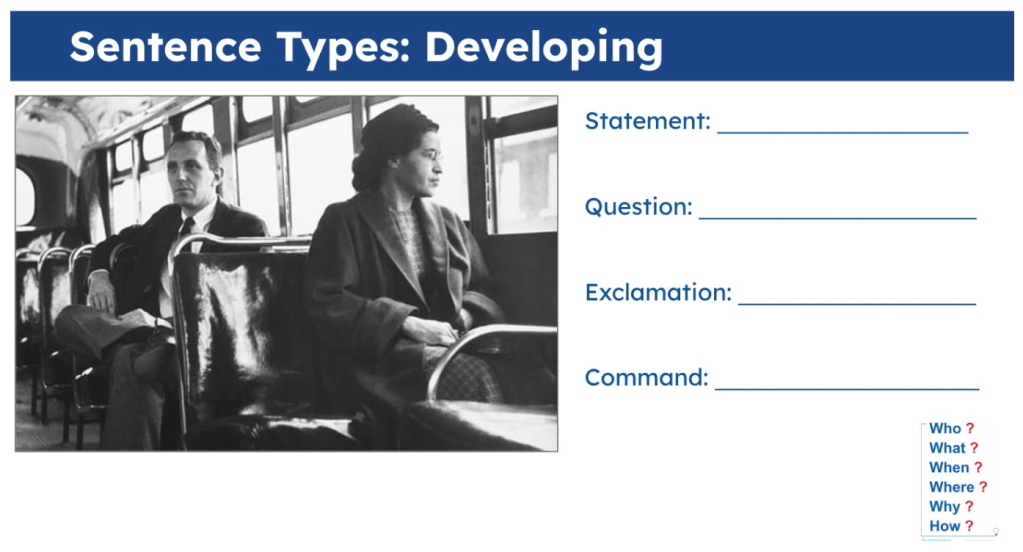
Types of Sentences and Captions (15 minutes)
We explored different sentence structures and wrote captions based on content images or concepts. This brief activity underscored how students’ sentence choices reflect their understanding and give teachers real-time insight.
- Can they summarize?
- Can they describe a cause and effect?
- Can they explain a process or idea in their own words?
Closure (5 minutes)
We closed by inviting reflection:
How might writing be used as a routine form of feedback and assessment?
Where in your curriculum could sentence-level work serve both as instruction and as insight?
What We’re Learning
In our session, we practiced what we believe: that writing is thinking, and thinking is visible when students write with purpose. Sentence-level strategies from The Writing Revolution help us build stronger writers—but they also help us build stronger understanding.
Writing isn’t just something we do at the end.
Writing is a way we learn along the way.
Let’s continue to design experiences where writing reveals what students understand—so we can teach responsively, assess authentically, and support every learner on the journey.
We’re grateful to the teachers who joined us, wrote with us, and shared their reflections.
Here’s to writing as learning.
Here’s to formative assessment that is embedded, practical, and empowering.
Let’s keep learning.
Jill

