As the school year begins, we set goals. With our discipline-specific teachers, we have a focus on writing. Yes, writing in the mathematics classroom. For all PD sessions, we share agendas and resources ahead of the meeting. For our 4th, 5th, and 6th Grade numeracy team, we have set these goals for the year.
Goals:
- I can strengthen students’ ability to write across the curriculum.
- I can implement the ‘Stronger and Clearer Each Time’ Illustrative Math lessons using sentence kernels or simple conjunctions sentence-starters as suggested in The Writing Revolution.
- I can strengthen students’ ability to attend to precision, i.e. to listen, speak, read, write, and think like a mathematician.
- I can deepen students’ understanding of vocabulary and use of precise mathematical language by integrating sentence scrambles and note making into IM units/lessons.
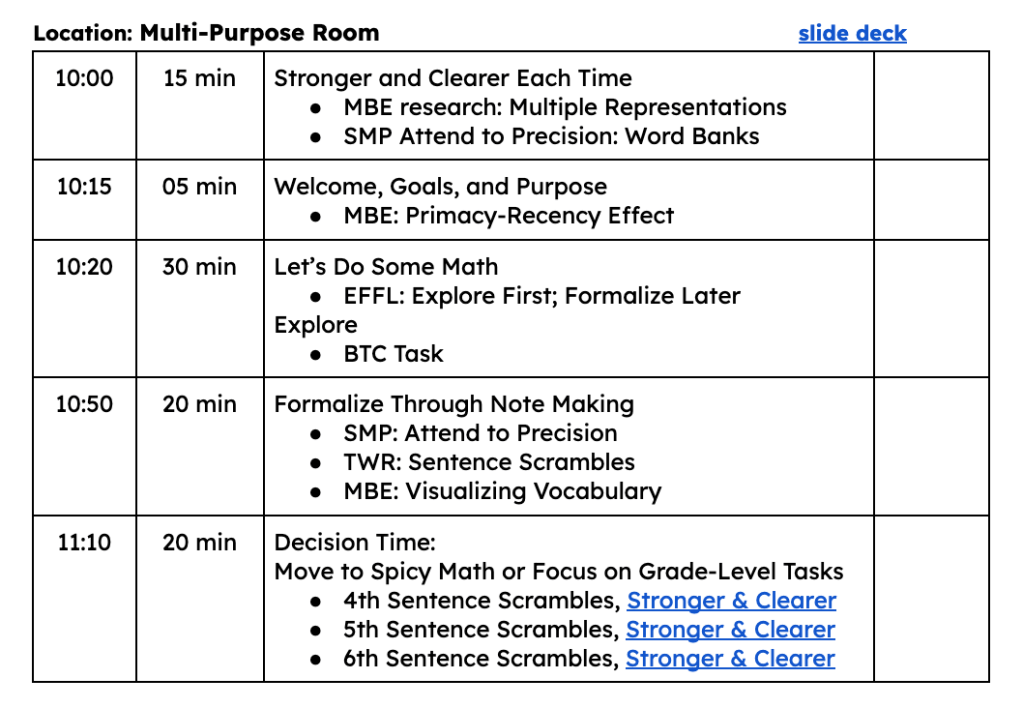
Here’s the agenda for the August 8 session:
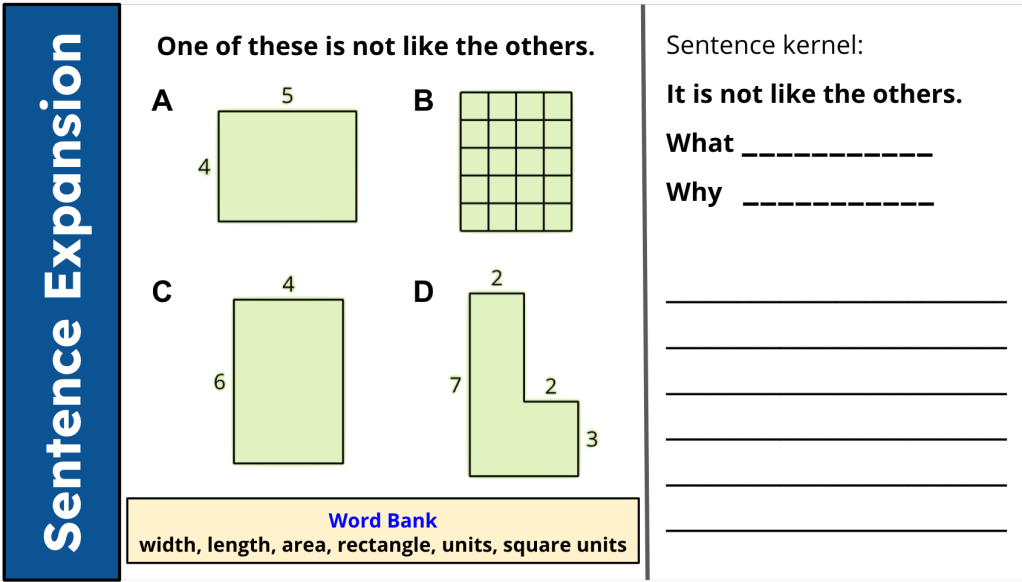
We started with a Which One Doesn’t Belong from Unit 1 of 4th Grade Illustrative Mathematics. But, we added a word bank to help students attend to precision. We also added a sentence kernel from The Writing Revolution. We know the fear of the blank page is real. We asked students to identify what image was not like the others and why. (Note: The dotted lines indicate fragments or phrases. The solid lines indicate a full sentence is to be written.) Once all participants had a sentence, we worked in pairs following the Stronger and Clearer Each Time math language routine.
We want all our learners to be confident, competent mathematicians. From Tracey Tokuhama-Espinosa’s Making Classrooms Better:
“Varying the way a concept or idea is rehearsed also helps recall. Saying something to ourselves over and over is effective, but saying it over and over and writing it down is even more effective. And it’s even more effective to say it, write it, and then make a mind map of it. Better still is saying it, writing it, making a mind map, and then teaching it to someone else, and so on.” (Tokuhama-Espinosa, pg. 133)
We intend to focus on recall, communication, and understanding. Combining these routines offers all learners in our care the opportunity to draft and redraft, receive feedback on their ideas, and rehearse how they communicate mathematical thinking.
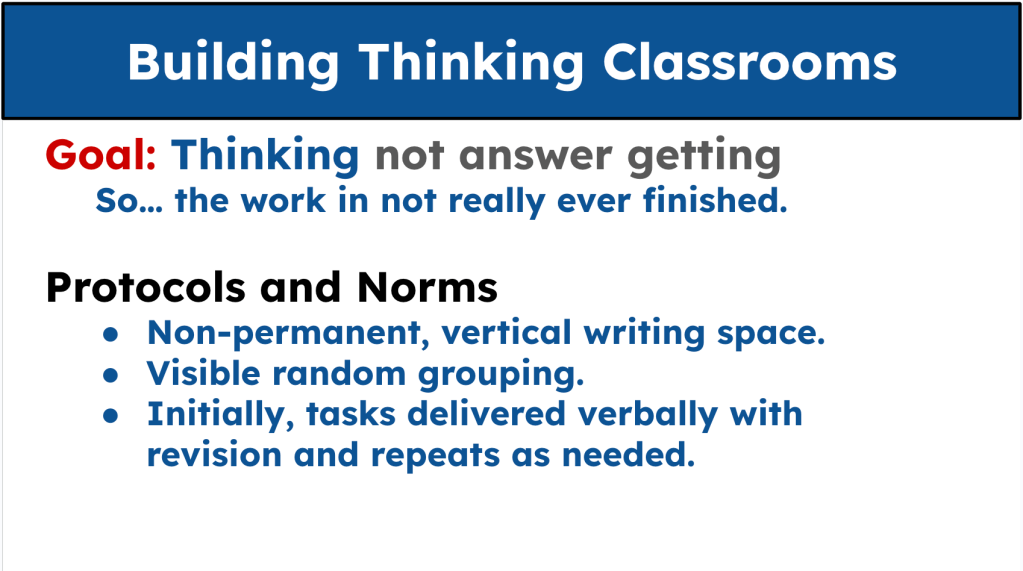
Next, we reviewed the norms for building thinking classrooms.
I facilitated the Tax Collector task from BTC. So fun! Problem-solving and important vocabulary were reviewed.
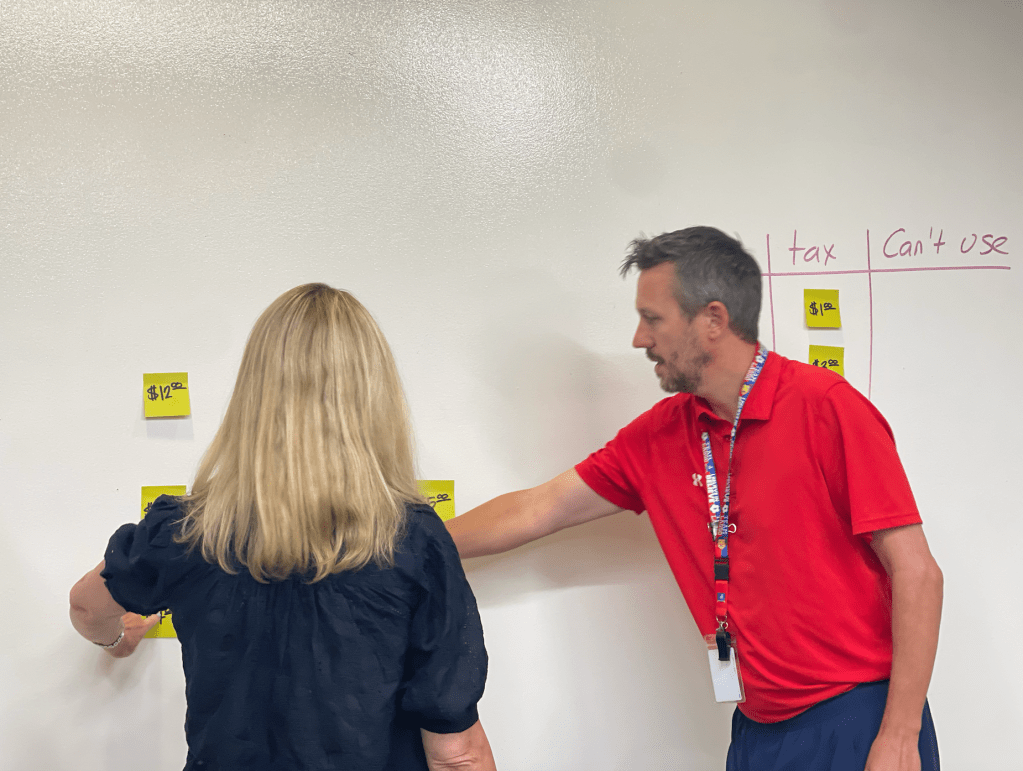
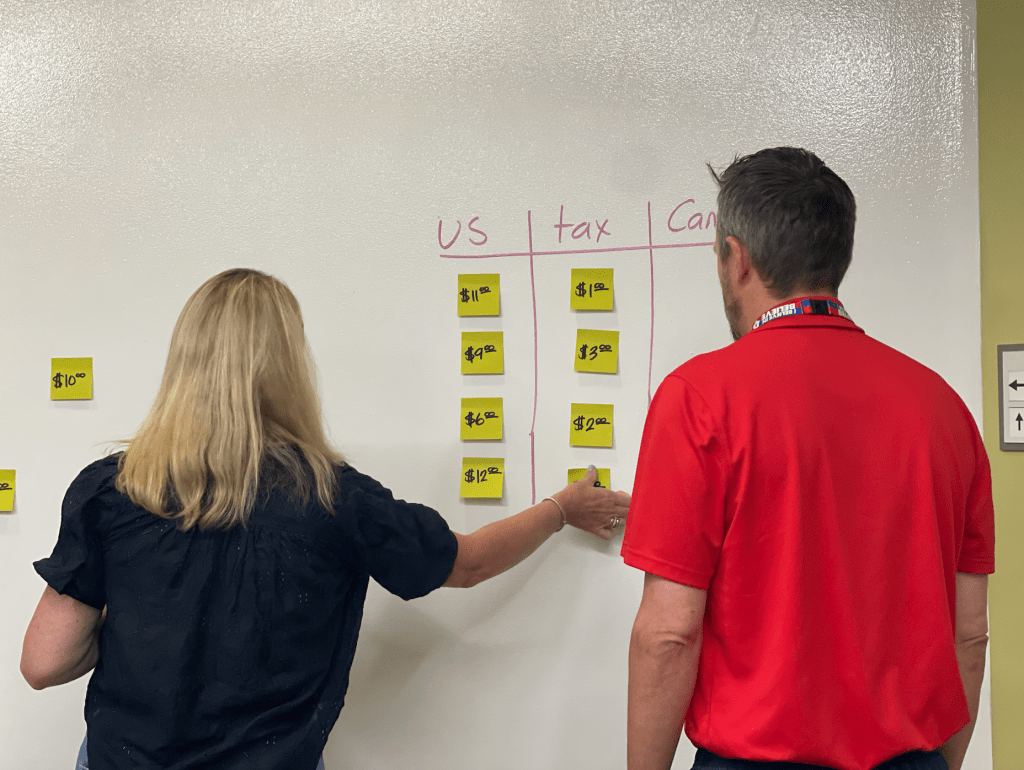
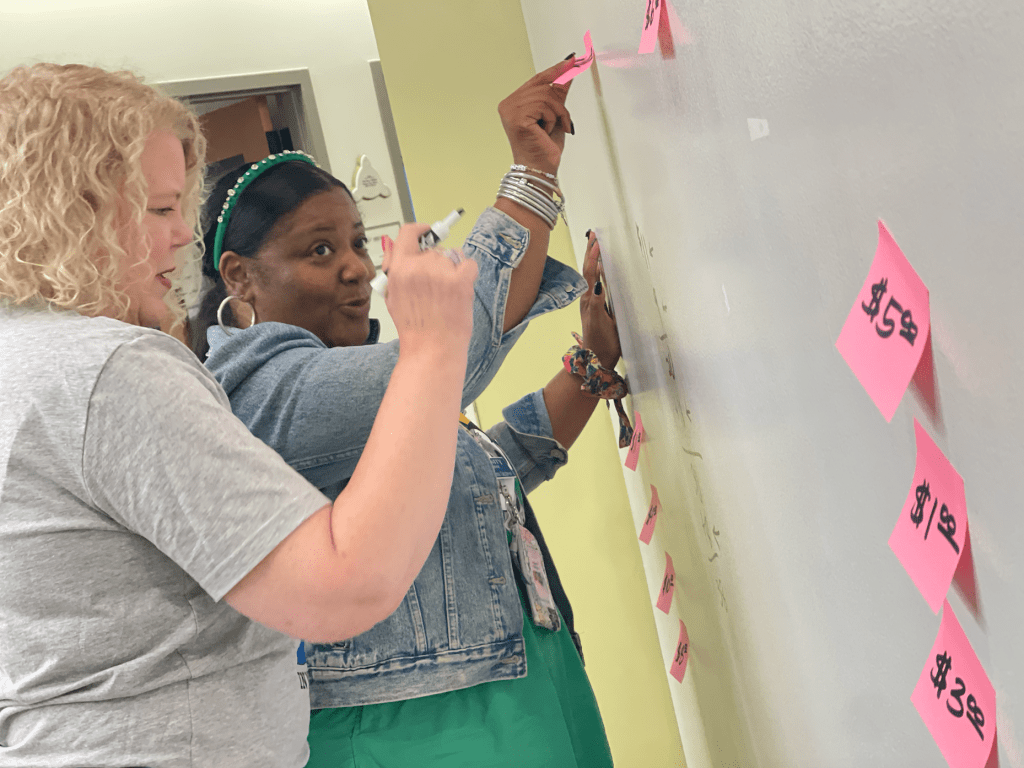
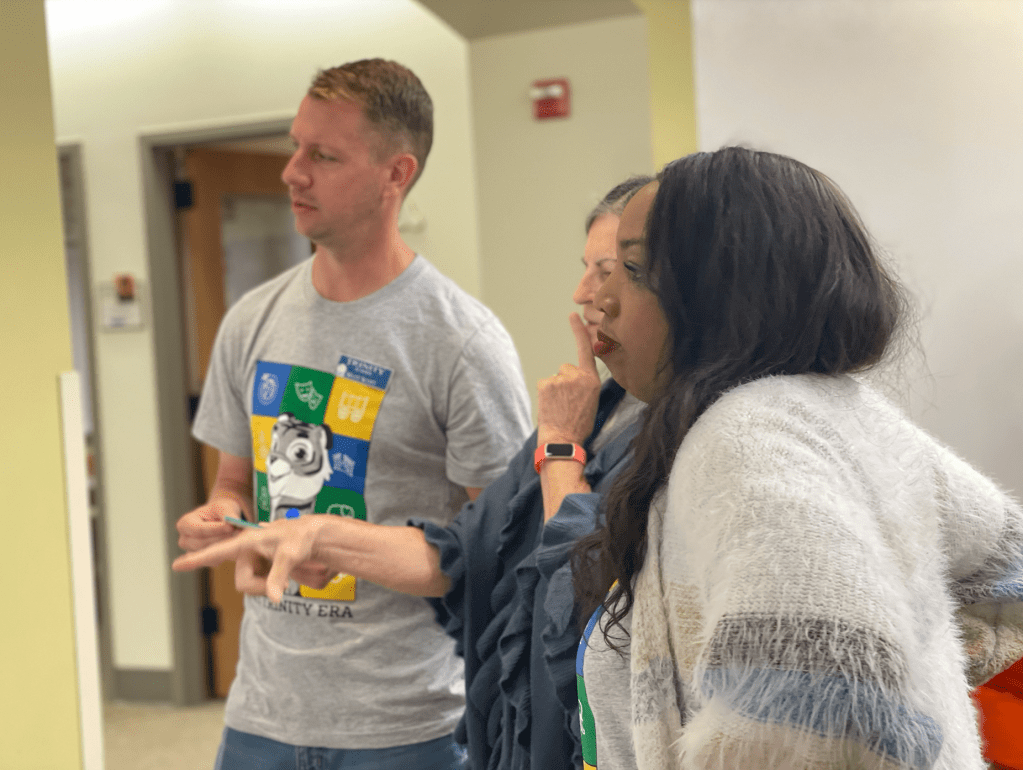
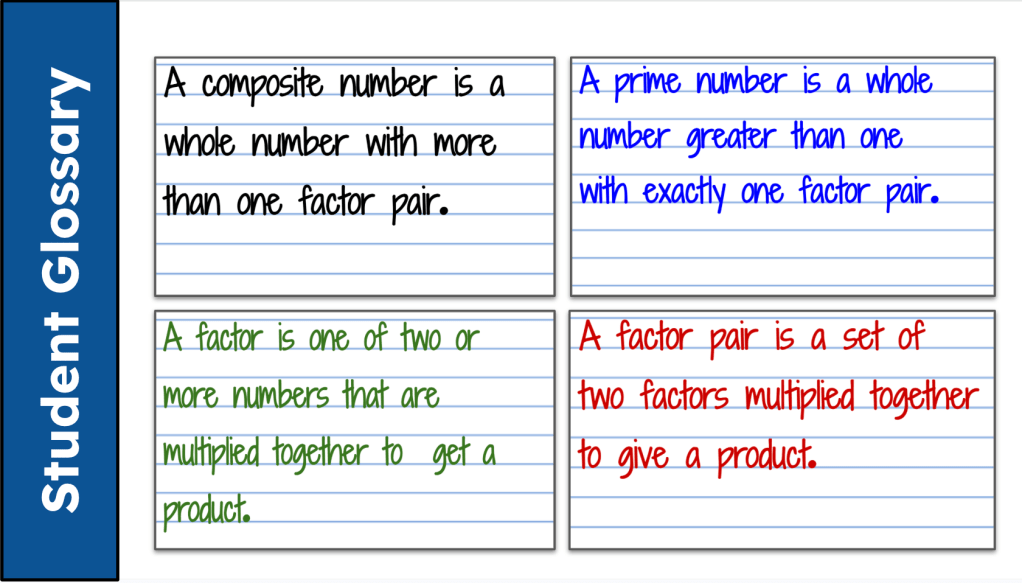
What I love about this BTC task is that it is challenging for adults and is appropriate for our students. Continuing this lesson in a language-rich classroom, we unscrambled sentences of the definitions for composite and prime numbers, factors and factor pairs.
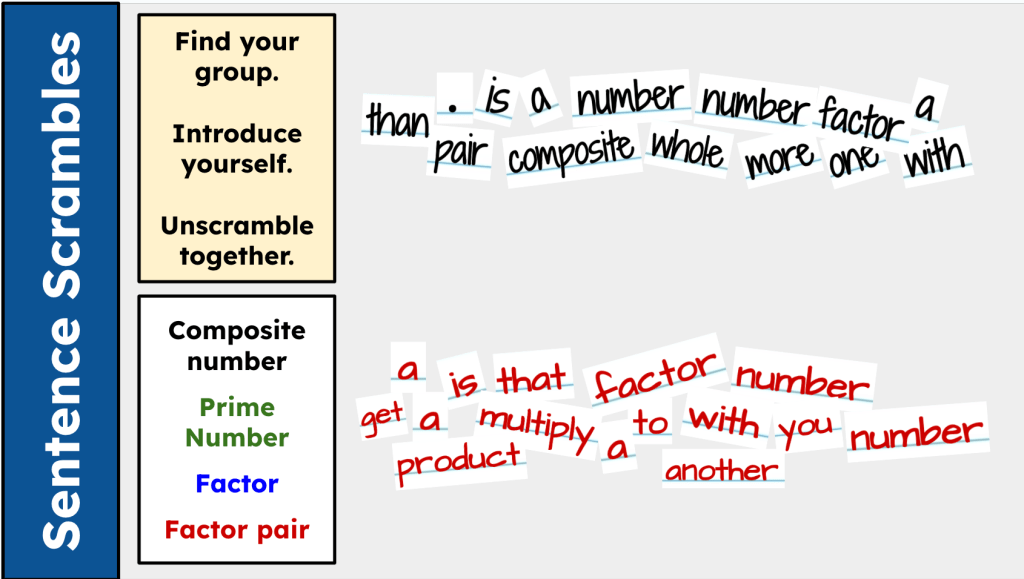
Once our definitions were unscrambled, we transferred them into our math notebooks and illustrated the definitions with examples. We want all students to develop a visual vocabulary section in their notebook.
Our goal is for all students to deepen their understanding and strengthen their recall and communication.
Our goal is for every student to listen, speak, read, write, and think like a mathematician.
Tokuhama-Espinosa, Tracey. Making Classrooms Better: 50 Practical Applications of Mind, Brain, and Education Science . W. W. Norton & Company. Kindle Edition.

