From The Trinity Way:
Trinity prepares its students for the future, helping them build the critical academic and character foundation needed for success and happiness in middle school and beyond. We layer knowledge, concepts, and strategies to grow intellect and empathy, strengthen reasoning and retention, and cultivate new learning cumulatively and patiently, day after day and year after year. Teachers utilize highly complex and systematic instruction in a language-rich environment that looks like play but is so much more. For elementary-aged children, this learning-to-play and playing-to-learn is essential to deep engagement and understanding. Playing with ideas, words, and numbers deepens academic comprehension and flexibility. Playing with friends develops social-emotional wellness, growing students’ sense of self and sincere care and concern for others.
As the Director of Teaching and Learning, I intentionally plan professional learning sessions for our teachers to mirror what we want to see in our classrooms. Marsha Harris, Director of Curriculum, and Kerry Coote, Mathematics Instructional Specialist, team with me to plan and teach using the tenets of Smith and Stein’s 5 Practices in Practice. We have goals and a task. Together, we anticipate before the session so we are prepared to select, sequence, and connect learning.
Here’s our agenda for our 2nd – 6th Grade numeracy teachers:
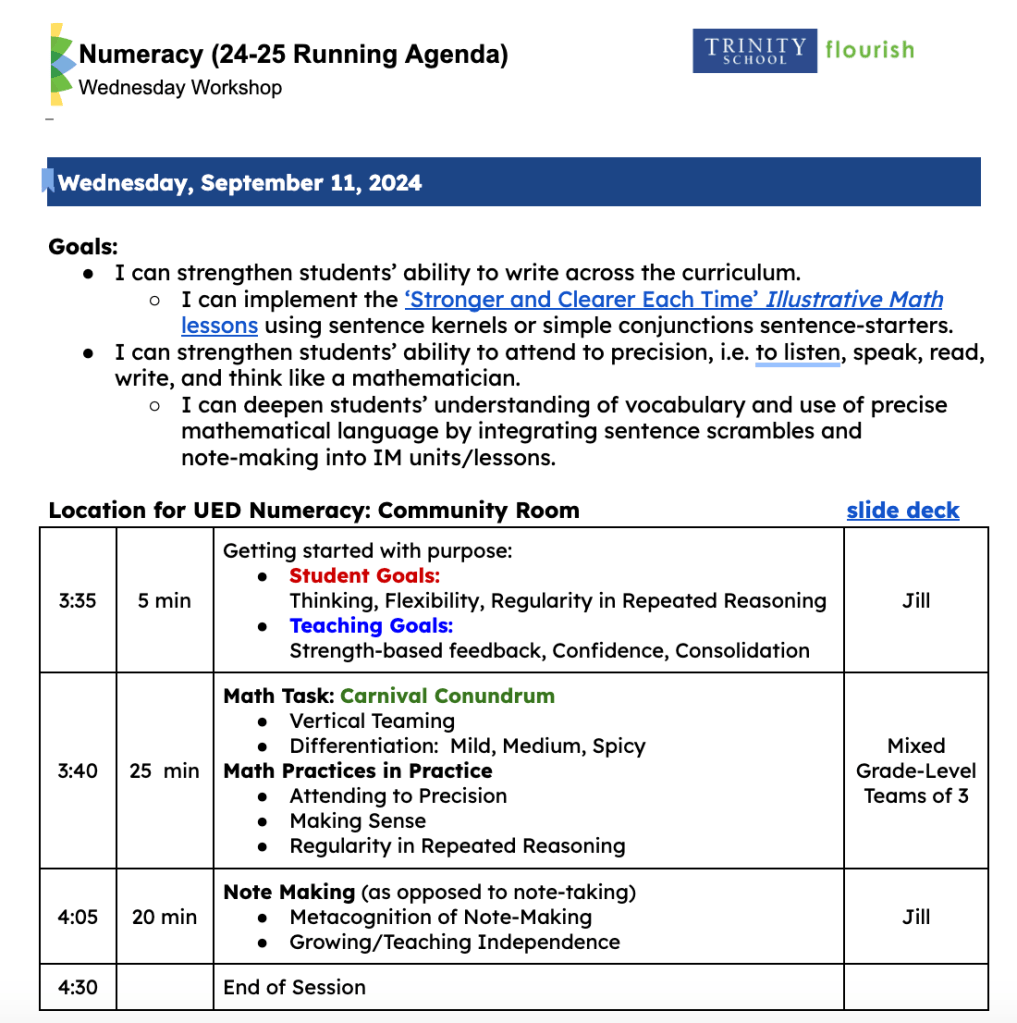
Have you tried Task 8: Carnival Conundrum from Mathematics Tasks for the Thinking Classroom, Grades K-5 by Peter Liljedahl and Maegan Girous? This task offers learners opportunities to build critical academic and character foundation skills. It also layers knowledge, concepts, and strategies to grow intellect and empathy, strengthens reasoning and retention, and cultivates new learning collectively and collaboratively.
Here’s what it looked like during PD.
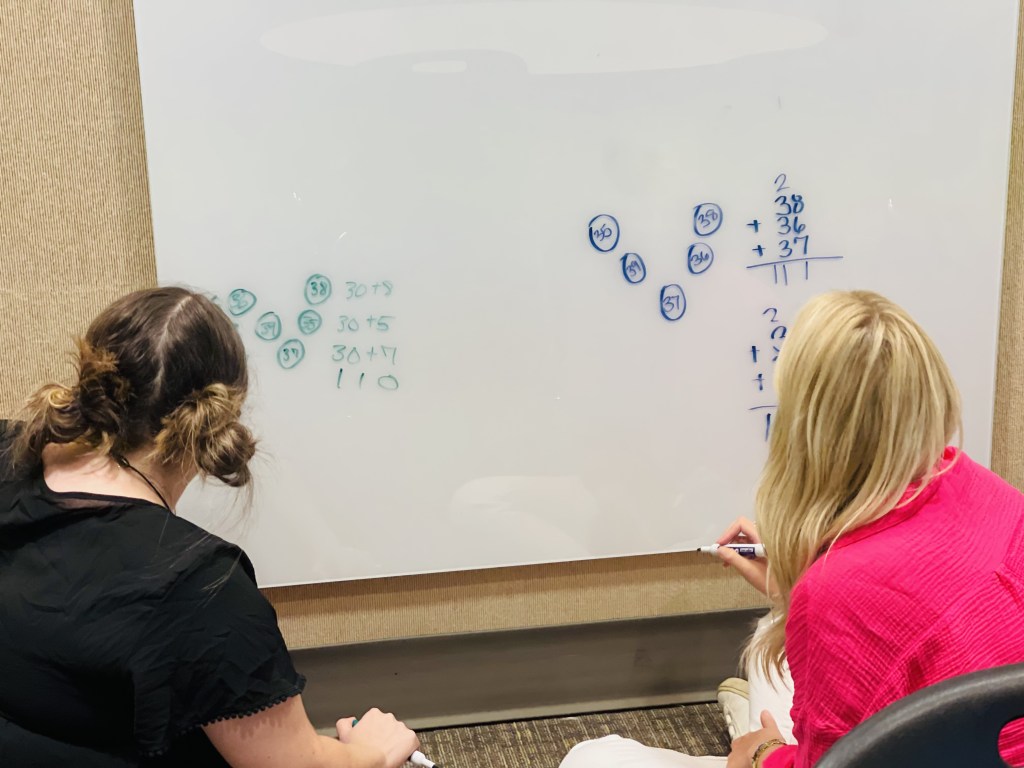
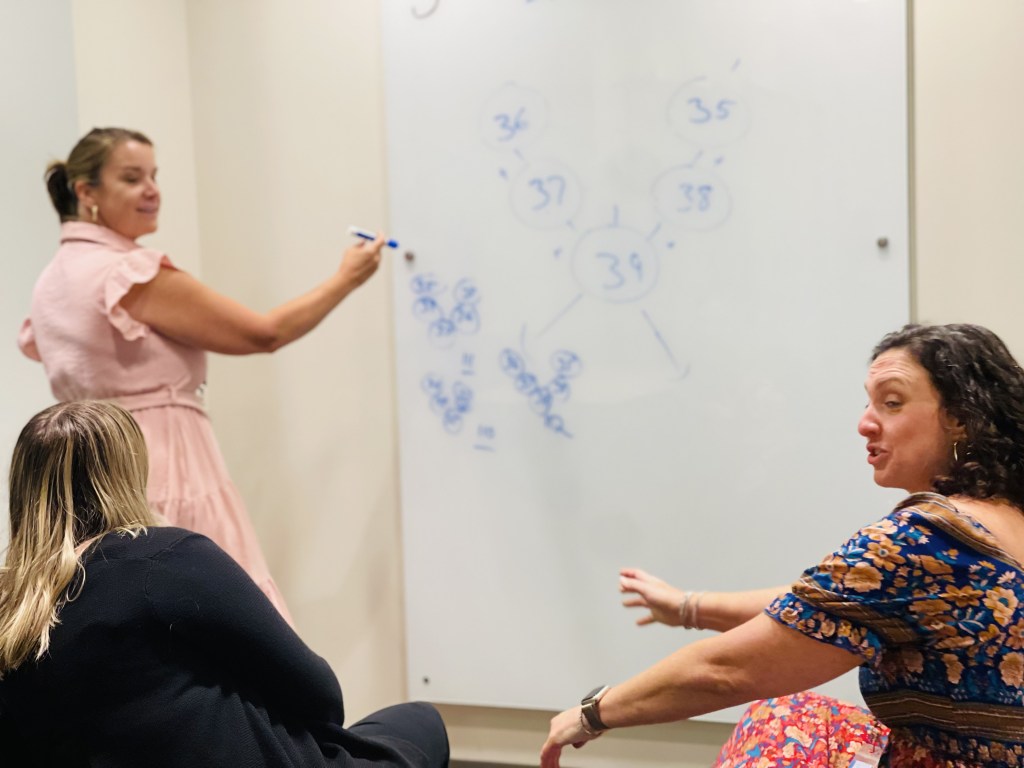
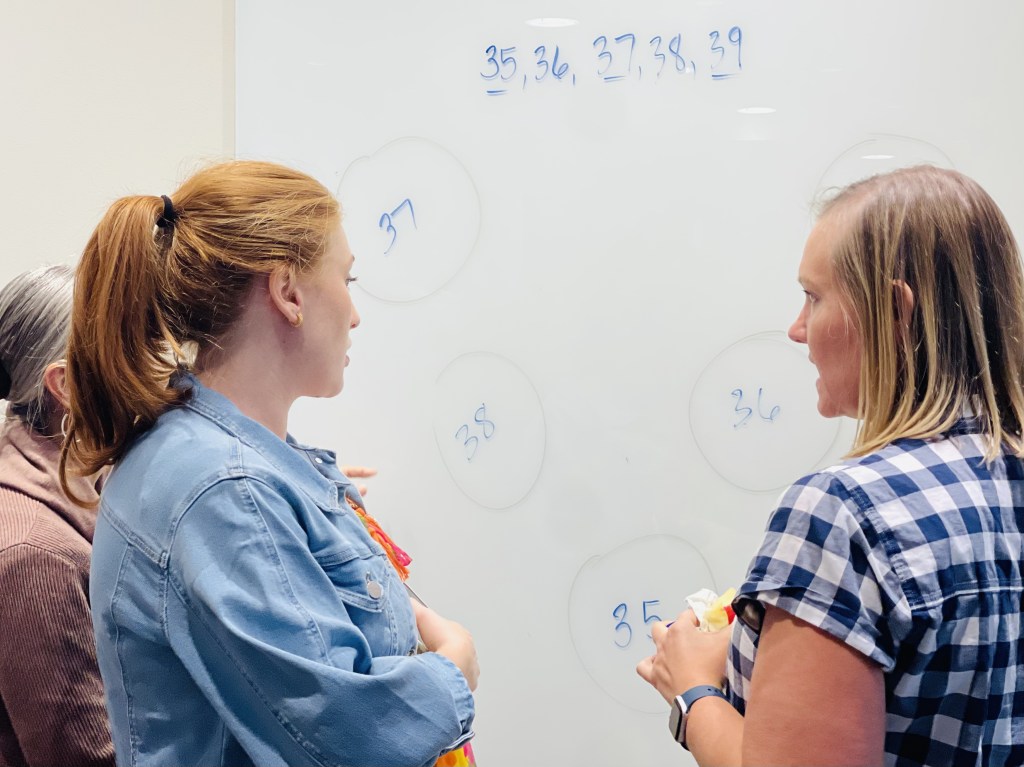
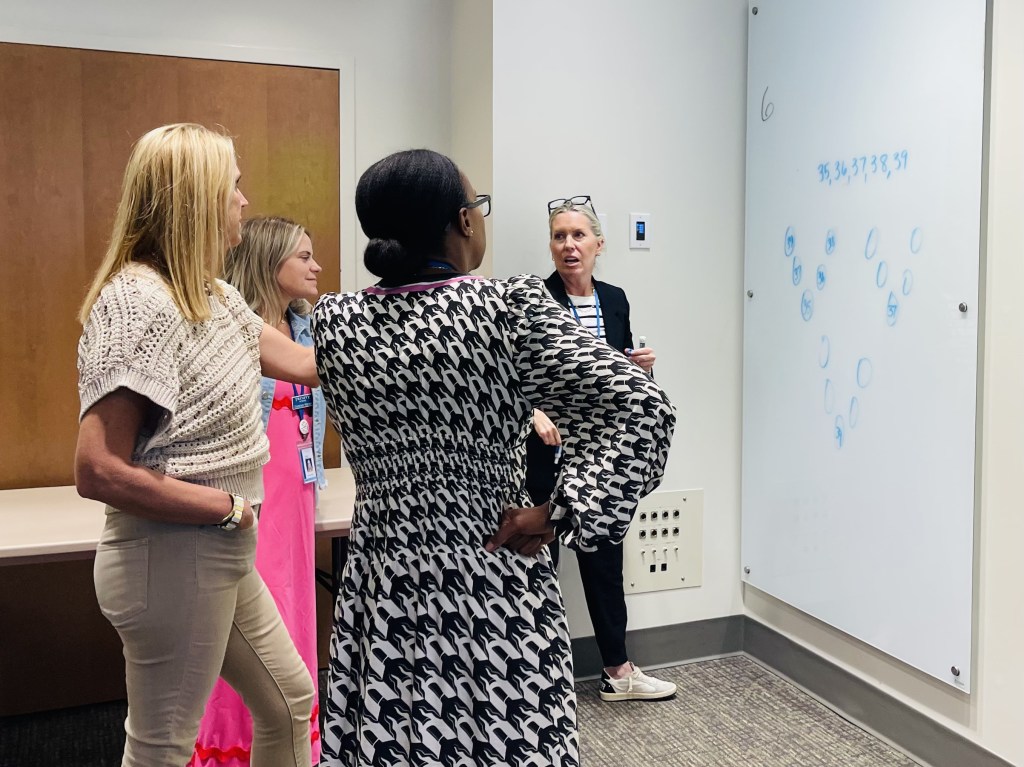
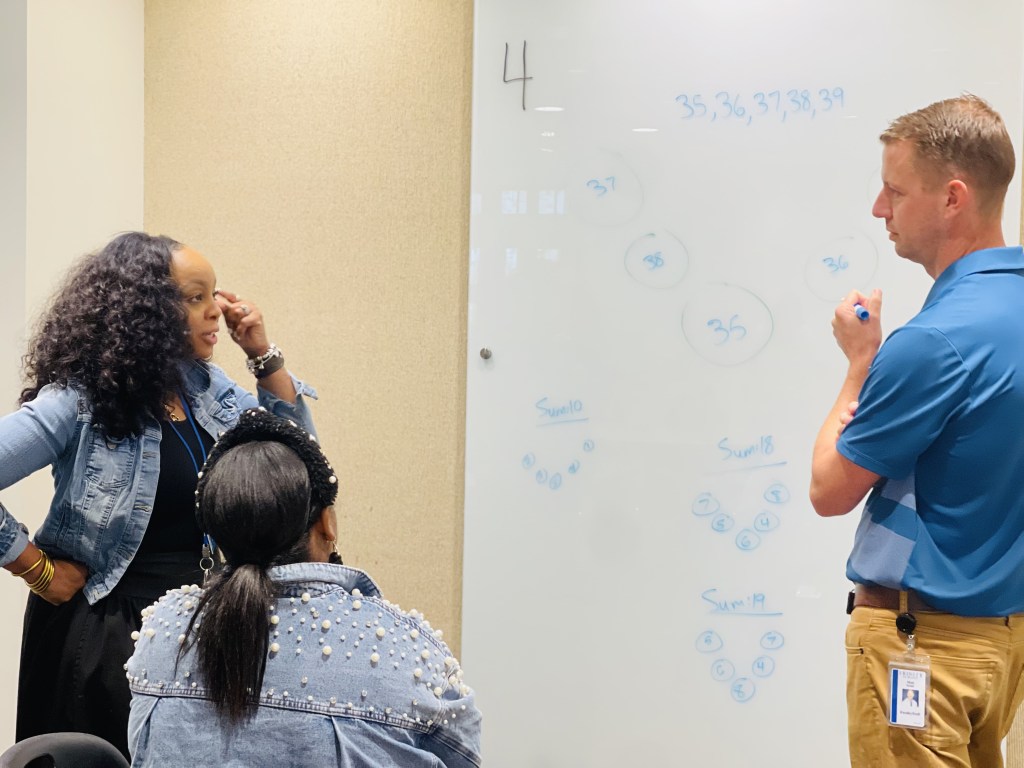
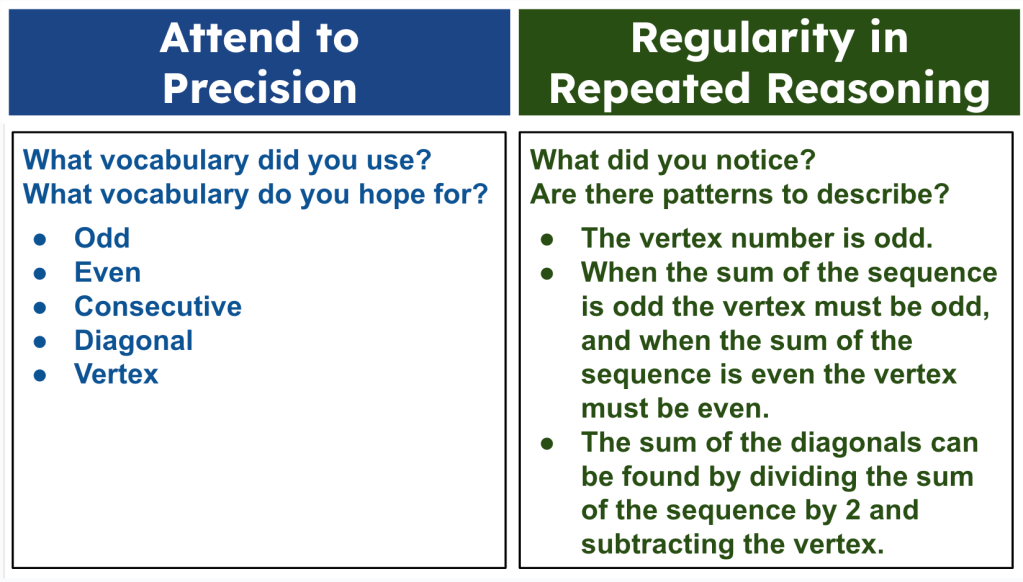
We stopped the action twice to debrief and change the task slightly, as outlined in the book. Together, we noted the vocabulary that naturally occurred during each debrief, along with the regularity in repeated reasoning that happened as multiple solutions emerged.
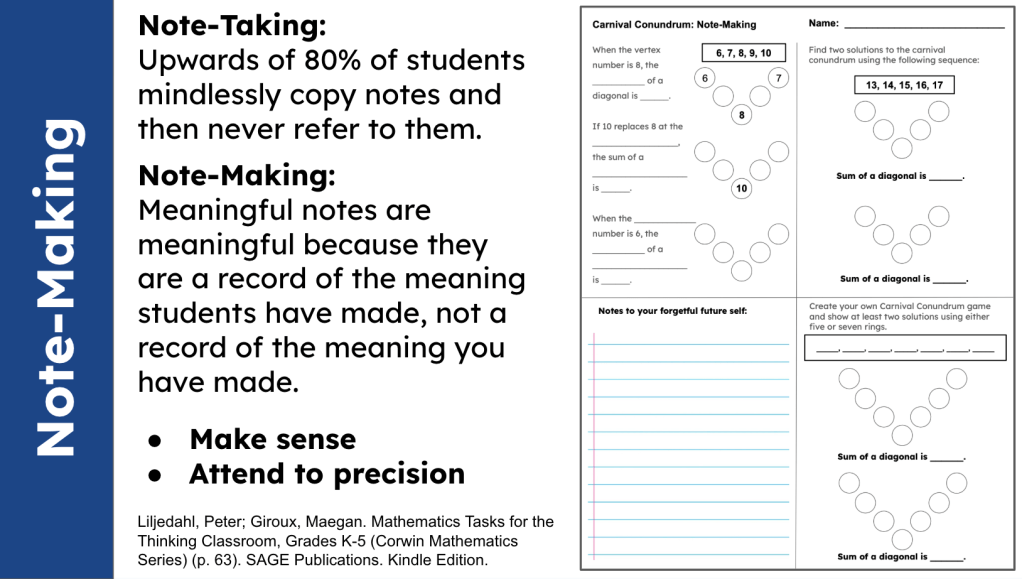
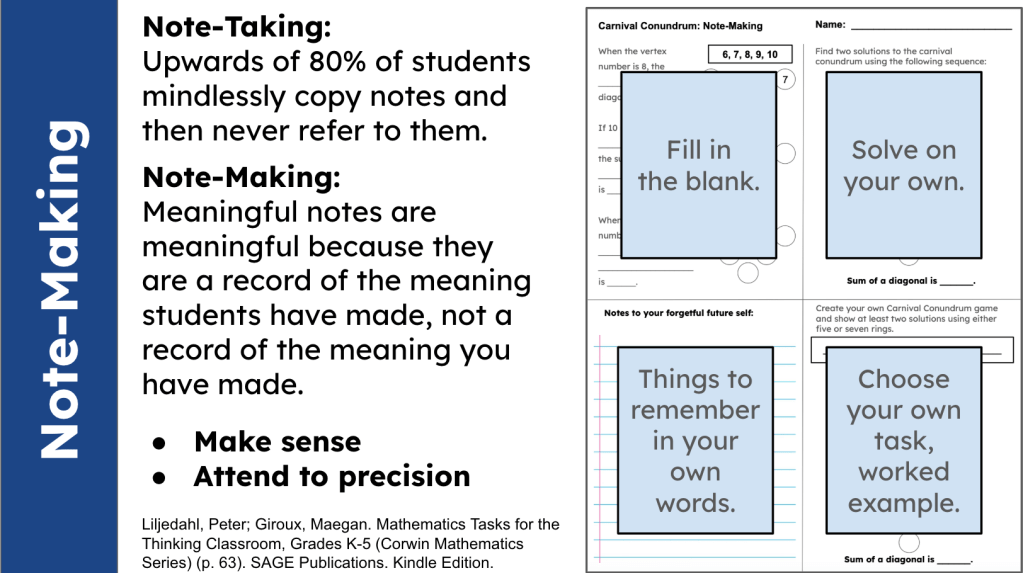
Once we called an end to the task – remember, the work is never really done – I pitched the BTC idea of note making instead of note-taking using a document that I created.
.
.
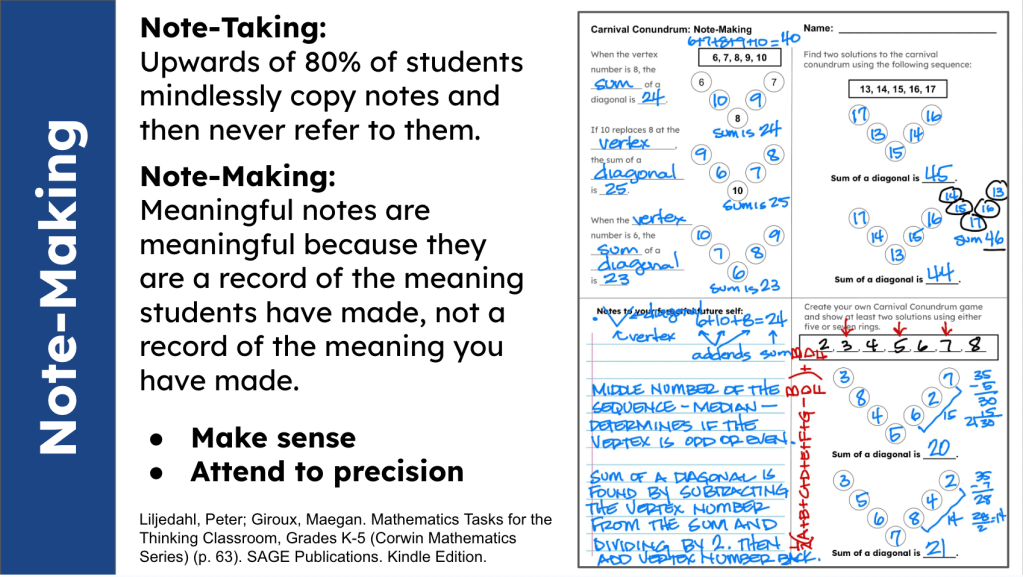
We like BTC’s note making for consolidation, and it connects to Tracey Tokuhama-Espinosa’s Making Classrooms Better:
Different levels of thinking require different skills, and the ability to synthesize and summarize requires far more neural circuits than simple memorization. When we ask students to paraphrase what others have said, we are exercising their summary skills. Note taking, which requires higher-order thinking than simple copying, brings this to yet another level. Copying notes from the board does little more than improve penmanship and perhaps give space for superficial reflection; deep reflection requires deep understanding. A great challenge in many classrooms is that teachers presume students have learned note taking skills at some other earlier stage of their education, and rarely do teachers take the time to explicitly teach these skills.
There is much more to learn, and we are working on it.
This learning-to-play and playing-to-learn is essential to deep engagement and understanding. Playing with ideas, words, and numbers deepens academic comprehension and flexibility. Playing with friends develops social-emotional wellness, growing students’ sense of self and sincere care and concern for others.
Liljedahl, Peter; Giroux, Maegan. Mathematics Tasks for the Thinking Classroom, Grades K-5 (Corwin Mathematics Series) (p. 143). SAGE Publications. Kindle Edition.
Tokuhama-Espinosa, Tracey. Making Classrooms Better: 50 Practical Applications of Mind, Brain, and Education Science (p. 179). W. W. Norton & Company. Kindle Edition.
 Experiments in Learning by Doing