New Faculty Academy, Tuesday, November 17, 2026
Marsha and I sat down to plan this week’s New Faculty Academy session with a long list of teaching moves we wanted to share. Then we looked at each other and agreed on the one that matters most: don’t rush.
So we didn’t. Instead of adding something new, we took the opportunity to practice what we preach. Since September, our new faculty have explored The Trinity Way and My Learning, the Science of Reading, the Instructional Core, The Writing Revolution, and Numeracy at Trinity. This session was a chance to pause, look back, and ask a simple question:
What do you remember?
Retrieval Practice in Practice
We opened by naming our purpose and intention. Retrieval practice is one of the most powerful learning strategies we know. When we pull information out of our heads, rather than putting more in, we strengthen memory and make learning more durable and flexible. It is also humbling. Retrieval shows us what has stuck and what is still fuzzy.
We asked new faculty to do exactly what we hope they will ask their students to do: recall first, then check, then connect.
My Learning: Does It Tell an Accurate Story?
Marsha invited everyone to open My Learning and engage in a Notice and Wonder. Our guiding question: Does it tell an accurate story?
We revisited Cherish, Empower, Deepen, and our hope that every student has a balanced portfolio that highlights the learning journey at Trinity. That portfolio should show the power of feedback, metacognition in action, and how we educate families about the learning happening every day.
Takeaway question: What does your classroom look like through My Learning?
It was amazing to see the growth in My Learning understanding and posting! We should have kept a portfolio of New Faculty growth over time. In just three quick months, everyone is more confident documenting metacognition, learning, and growth.
Science of Reading: Where Is It Evident?
Next, we asked: Where are the Science of Reading components evident in your classroom and in My Learning?
We retrieved the big ideas. The Science of Reading is a body of research, not a program. In 2000, the National Reading Panel synthesized evidence about effective reading instruction, and the five components came into focus:
- Phonemic awareness
- Phonics
- Fluency
- Vocabulary
- Comprehension
And the things to remember about how we teach them: explicit, direct, systematic. Structured literacy.
New Faculty could discuss the Science of Reading at a high level, and when asked where it shows up in their classrooms, they could get down in the weeds of the details. While there is still more to learn, again, progress!
Instructional Core and Collective Teacher Efficacy
We returned to the Instructional Core: the relationship between the student, the teacher, and the content. Improved student achievement lives in the strength of those relationships.
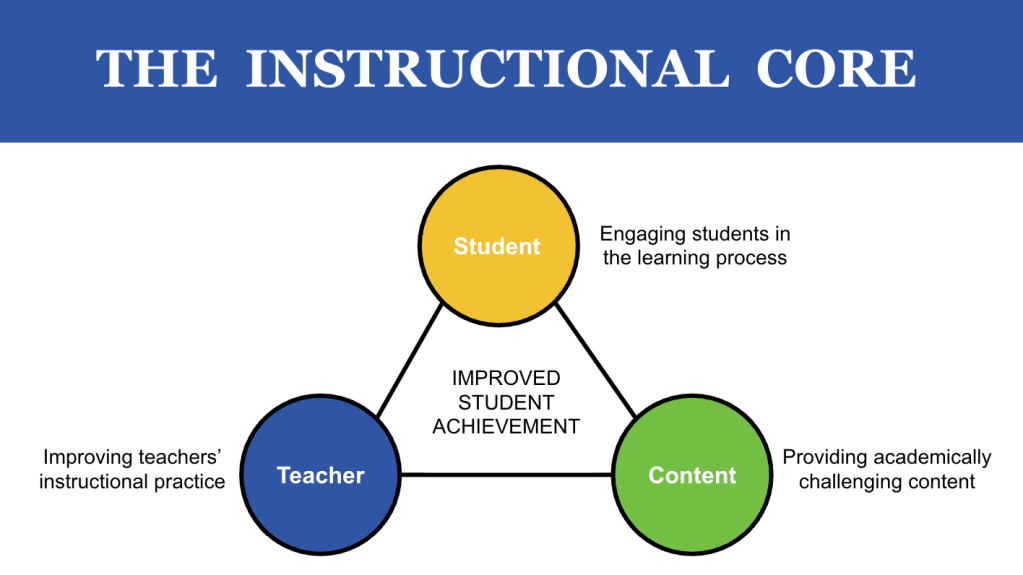
We connected the Instructional Core to Collective Teacher Efficacy, the shared belief that together we can make a difference for every learner. With an effect size of 1.57, it is one of the most powerful influences on student achievement we know.
Three questions guided our conversation:
- What is the Instructional Core?
- Where do we have clarity?
- What relationships still need to be built?
Takeaway question: How do you and your team cultivate and strengthen the Instructional Core and Collective Teacher Efficacy?
The Instructional Core and Collective Teacher Efficacy were the most difficult ideas to retrieve. Understandable! This cohort has had only three months at Trinity, and we know they need more time.
The Writing Revolution: Shared Reading to Sentence Expansion
Sentences are the building blocks of all good writing. The Writing Revolution works at the sentence level, connects to the curriculum, and is built on a set of routines that students come to know well.
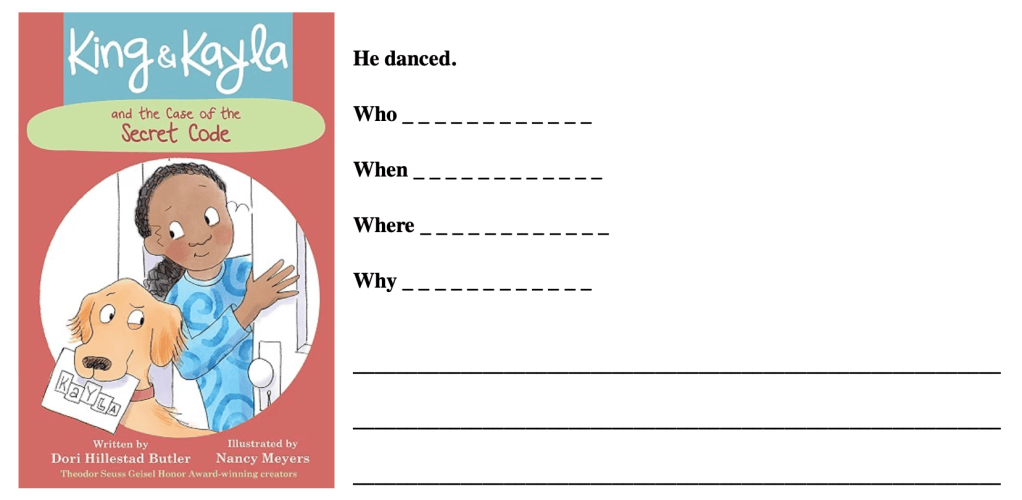
Marsha layered in a moment of shared reading, connecting the Science of Reading to our work with The Writing Revolution. After New Faculty wrote a draft, Marsha had them use the Stronger and Clearer routine to get feedback and revise.
Numeracy: To Be Continued
We planned to end where we love to end: thinking together at the boards with The Carnival Conundrum, a Building Thinking Classrooms task that builds fluency, confidence, and sense-making. Of course, in an effort not to hurry, we did not get to Numeracy at Trinity. We will pick up here in our next meeting.
Why Slowing Down Matters
It would have been easy to fill this session with something new. But new faculty are drinking from a firehose, and so are our students. Pausing to retrieve, revisit, and connect is not a detour from learning. It is the learning.
Learning is the constant; time is the variable. And the ones doing the talking are the ones learning.
What might change in your classroom if you gave yourself permission to slow down? What do your learners remember? How do you know?

