Strength, resilience, and a little bit of encouragement can make all the difference.
What do you notice, and what do you wonder when looking at WT’s data?
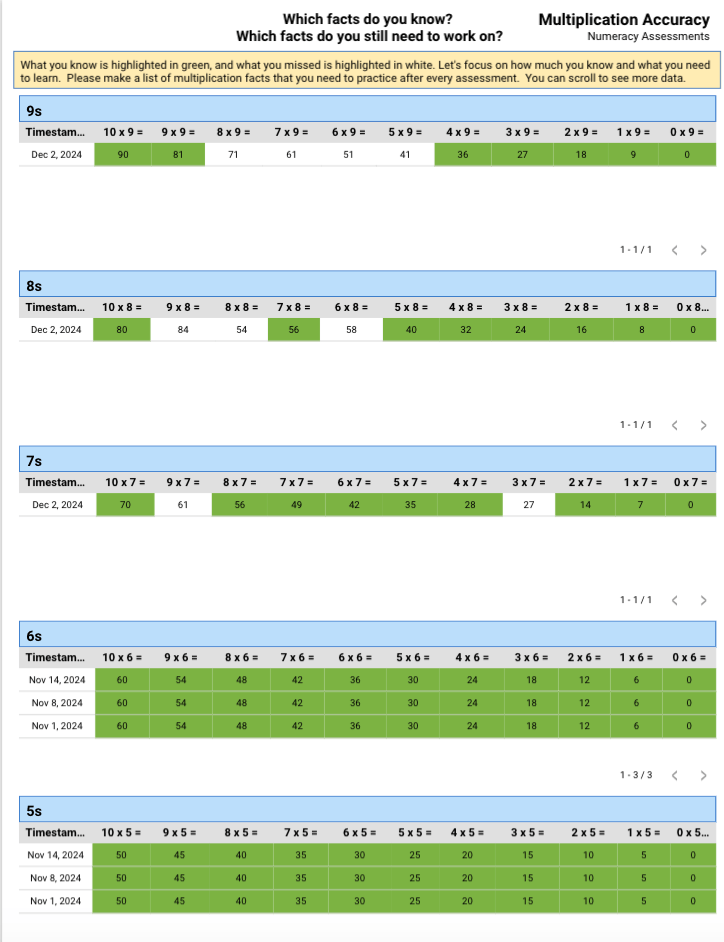
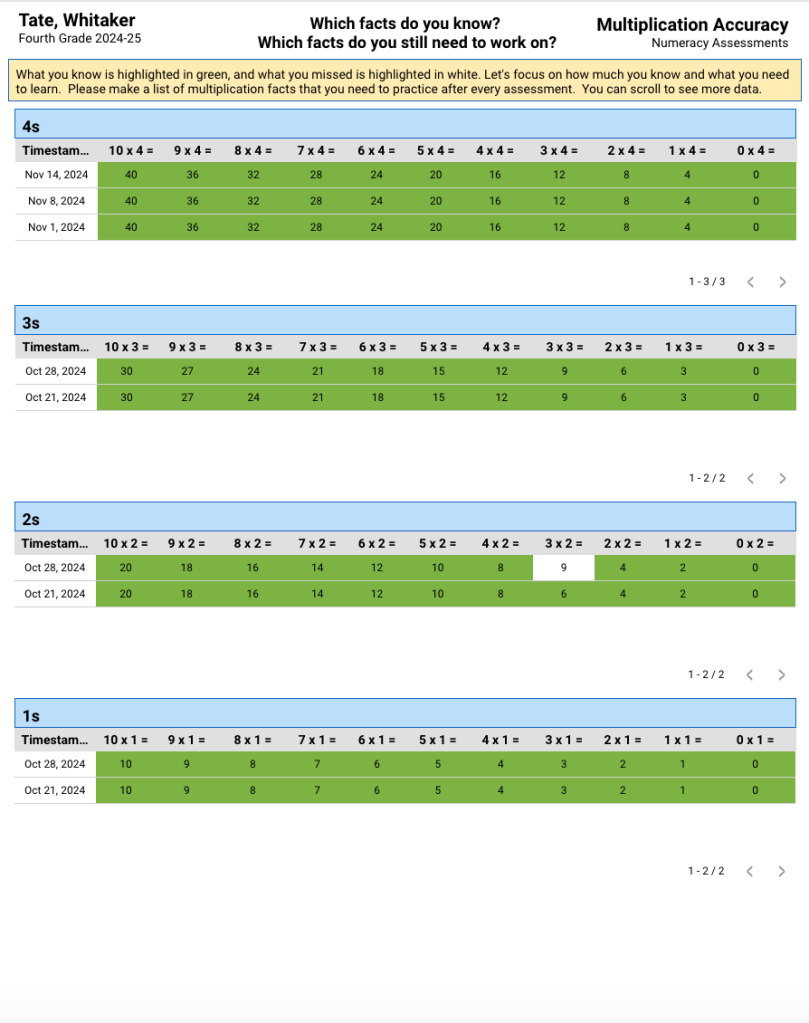
Yes, that is correct! This student knows a lot of their multiplication facts. If it is highlighted in green, it is correct. Did you notice what is happening with the 9s? Sarah Mokotoff, UED Learning Specialist, and this student did!
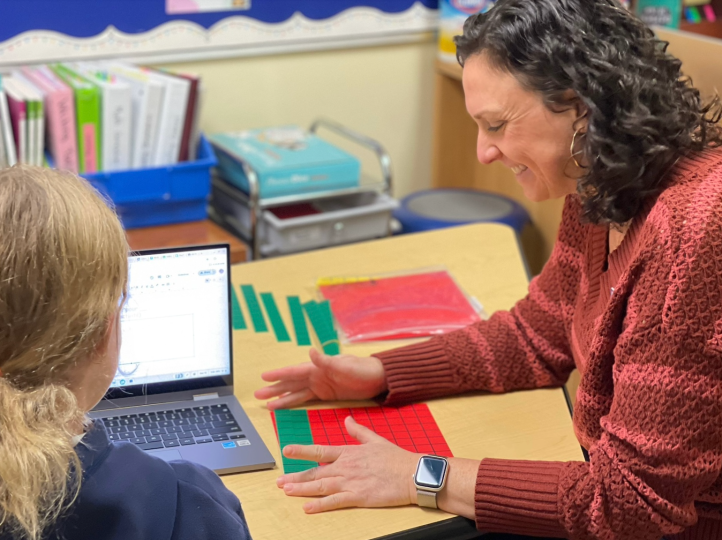
Let me back up. A couple of weeks ago, Kerry Coote, Trinity’s Mathematics Instructional Specialist, wished we would empower our students to take more action and more responsibility for their learning. Up to this point in our multiplication fluency assessments, students and teachers had this view of outcomes.
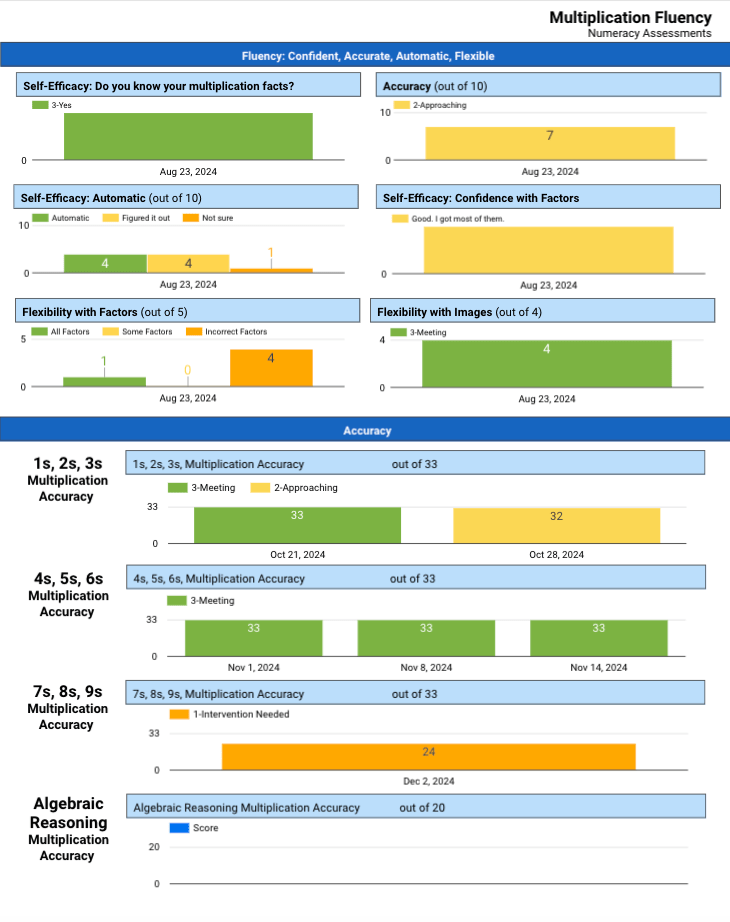
Kerry’s question challenged me to add more data to each student’s numeracy profile. Now, each student can track their progress over time and see their success along with what needs their attention. Let’s go back to WT’s granular data. This data is in the hands of WT. Students have to show this data to their teachers and ask questions.
Do you see what Sarah and WT noticed? Sarah and WT noticed a little regularity in repeated reasoning of the incorrect answers. Look at these assessment results closely.

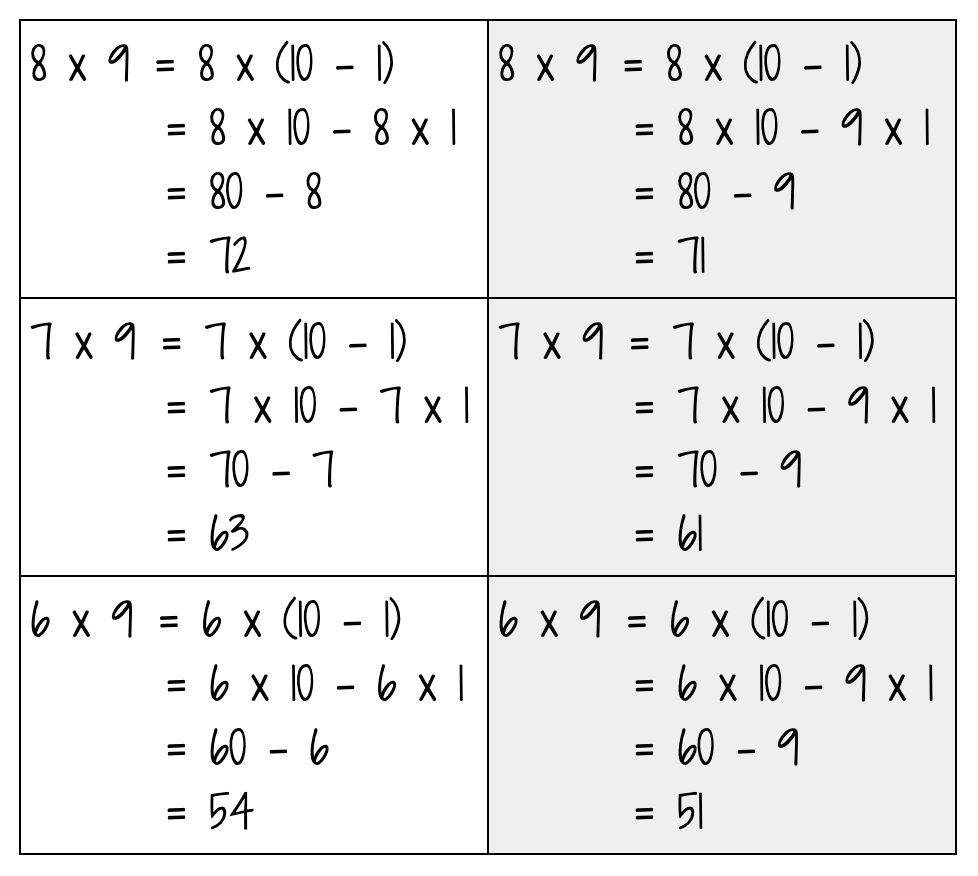
The four missed facts all have a 1 in the one’s place. Hmm… What was WT thinking? WT is using the strategy round-and-adjust. WT knows that 9×10=90. So 9×9, using round-and-adjust, becomes (10-1)x9 which is 10×9-1×9=81.
While sitting together and discussing the work, they realized what was happening. I’ve shown the round-and-adjust method for 8×9, 7×9, and 6×9 and, in the gray background, what Sarah and WT discovered. Remember, WT is mentally using round-and-adjust. We have the luxury of seeing it written out. This highlights the importance of making your thinking visible.
We want our students to be active advocates for their learning. They need us to listen to what they understand and help them get back on track. Now that we know round-and-adjust is the strategy, it is easy to discuss WT’s reasoning and make a correction. I’m not sure if either the teacher or the student would have discovered it by themselves. We are stronger together.
How might we impact learning for one student if we empower them to ask questions? To advocate for themselves? We have to set the conditions for this to happen. And we have to listen to learn.
Strength, resilience, and a little bit of encouragement can make all the difference.
We are stronger together.
 Experiments in Learning by Doing