After our Pre-Planning session, teachers took time to explore the resource choices. The plan is to differentiate based on faculty interests. At each face-to-face session, faculty decide to continue on their chosen path or change to a different one. New paths are planned as we learn together. If teachers would like to explore additional topics, they are invited to discuss their plan with me, and we will add it to the paths to be explored.
First Paths, Descriptions, and Assignments:
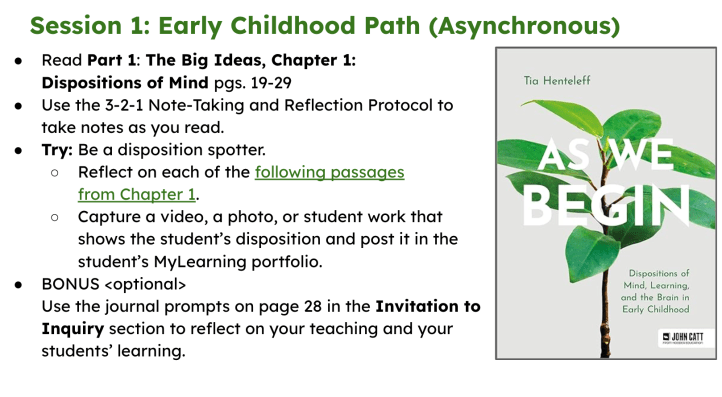
Early Childhood Path
- Combines a social-emotion path with an academic path: The early focus will be on dispositions toward learning. We know that memory and attention are the two non-negotiable ingredients for learning, and learning cannot happen in the brain without them. Feelings are the gateway to memory and attention.
- Resource: As We Begin: Dispositions of Mind, Learning, and the Brain in Early Childhood by Tia Henteleff
Social-Emotional Path
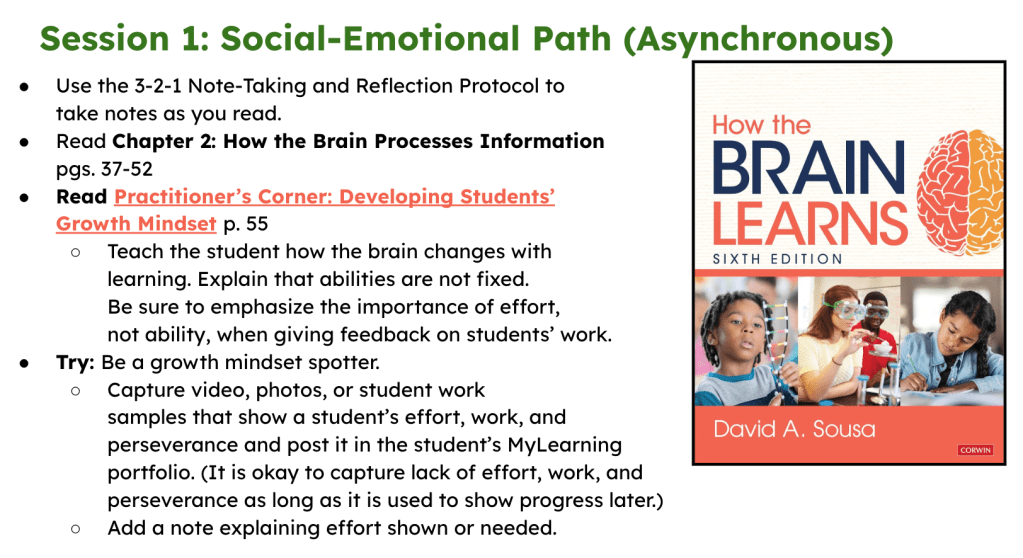
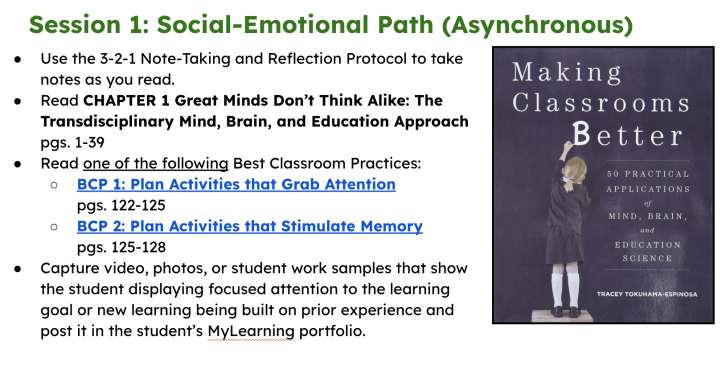
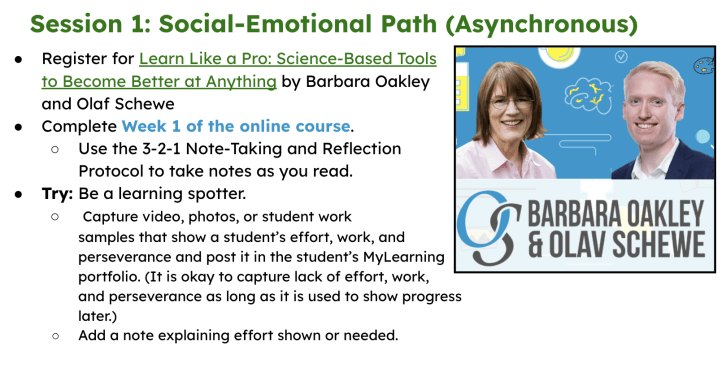
- An area in which significant advances in MBE have been made over the past decade comes from the field of emotions and affective neuroscience. We know that affect greatly affects how, why, and when a person can learn. Good learning environments are made, not found. Well-managed classes take advantage of natural human attention spans. Good classroom activities take advantage of the social nature of learning. Good teachers understand the mind-body connection (sleep, nutrition, exercise). Good teachers understand how to manage different students.
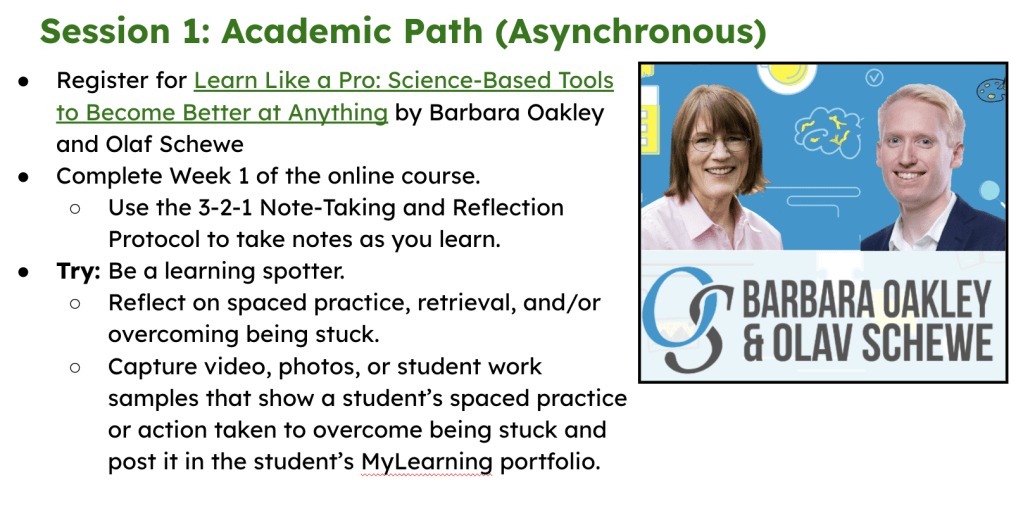
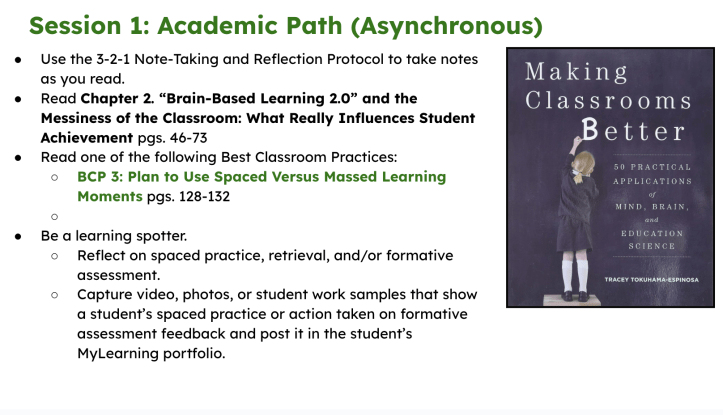
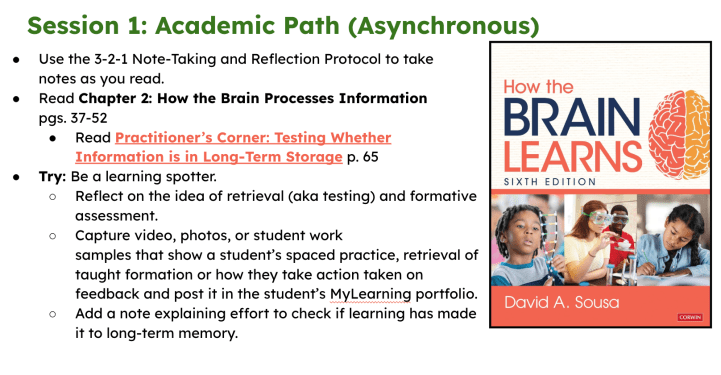
- Resources: Making Classrooms Better by Tracey Tokuhama-Espinosa, How the Brain Learns by David Souza, and Learn Like a Pro: Science-Based Tools to Become Better at Anything by Barbara Oakley and Olaf Schewe
Academic Path
- Since all new learning passes through the filter of what we already know, making explicit connections to our knowledge base aids learning. The early focus will be planning activities using spaced practice, retrieval, and formative assessment.
- Resources: Making Classrooms Better by Tracey Tokuhama-Espinosa, How the Brain Learns by David Souza, and Learn Like a Pro: Science-Based Tools to Become Better at Anything by Barbara Oakley and Olaf Schewe
As you can see, I’ve differentiated in several ways to accommodate a diverse team of teachers. We plan to meet in October, share what we are learning, and move ahead again. All of these resources are posted in our shared Google Classroom so that our learning is visible. All faculty members use the 3-2-1 Note-Taking and Reflection Protocol to take notes.


[…] education. There’s a course plan, outline, differentiated resources, and the learning has begun. Session 1 was asynchronous and planned so that we had time to read, study, and experiment with new ideas. […]
LikeLike
[…] Session 1: Asynchronous Session […]
LikeLike