How do we keep a read-aloud moving, keep every student in the text, and still make room for the words and ideas that matter most?
After last week’s PD day with Jamey Peavler, Michele Payne has been weaving more vocabulary into her read-alouds and class discussions. Her students are making sense of these words and ideas, and it shows in their writing afterward. She invited me into her literacy block to look at a question many of us share: how do we keep students engaged during read-alouds, especially on days with long chapters, and where can we streamline?
The class is reading Blood on the River, Elizabeth Carbone’s novel about Jamestown in 1607, as seen through the eyes of Samuel Collier, an orphan who sails to the New World as a page to Captain John Smith. I joined them for Chapter 25.
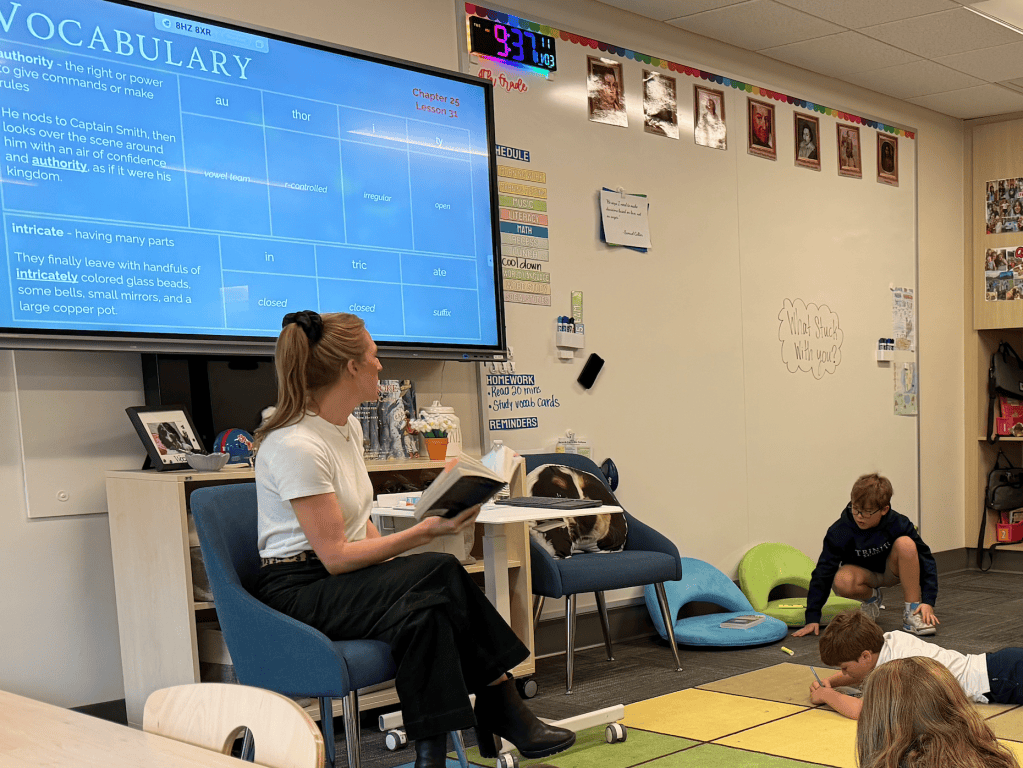
Students Do the Remembering
The lesson opened with students, not the teacher, rebuilding the story so far. Hands went up quickly. Students recalled Samuel’s life as an orphan, the settlers’ search for gold, the Virginia Company’s promises of gold and paradise, and the contract that kept settlers from telling their families back home the truth.
Then partners turned and talked: What were 3 BIG moments from yesterday?
What did they choose? Change. Samuel was released from servitude, moving from orphan and page to commoner. Smith rose from commoner to captain. Students were already tracking how characters grow, and they were doing it from memory. That is retrieval practice at work, and it set the stage for everything that followed.
A Purpose for Reading
Before reading, Michele previewed two words, authority and intricate, and gave students a lens for the chapter:
Look for evidence that Samuel really has matured and changed. Pay attention to his thoughts and actions.
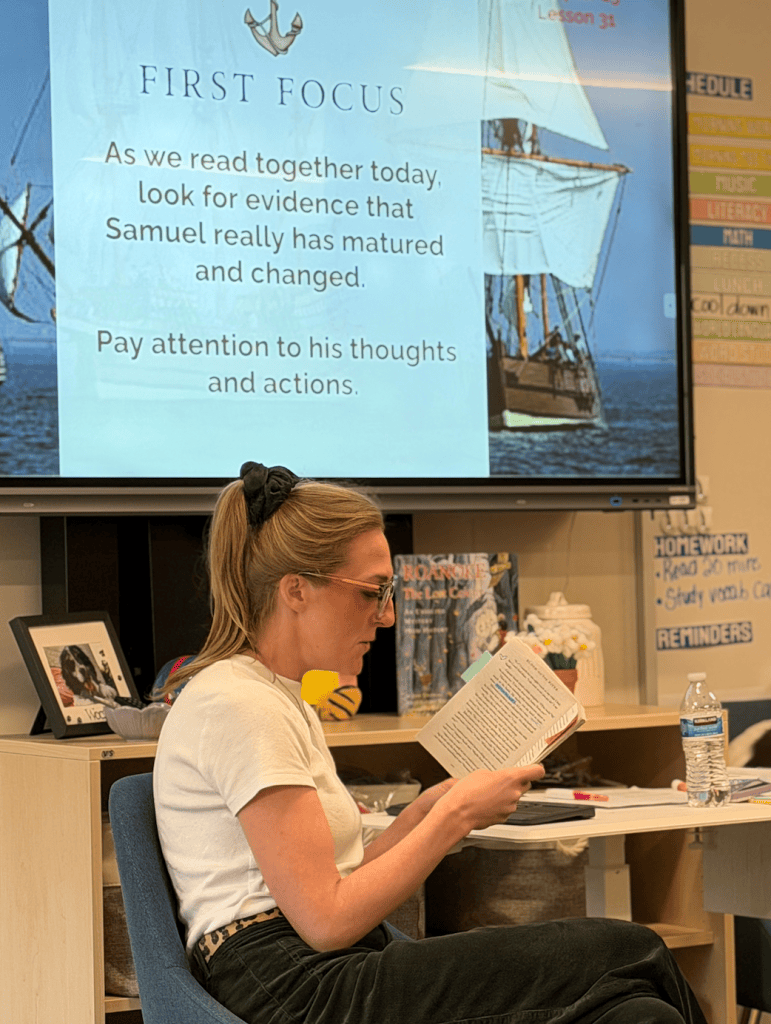
I noticed a book club norm I love: dinner table conversation. And she gave students a way to hold onto their questions without stopping the story: pin it or annotate it to ask later.
How often do our read-alouds stall because a great question pulls us off course? “Pin it” honors the question and protects the flow of the reading. Later, when a student asked about a detail from an earlier chapter, Michele said, “Jot that down. We will talk.” The question was kept, and the reading kept moving.
Everyone in the Text
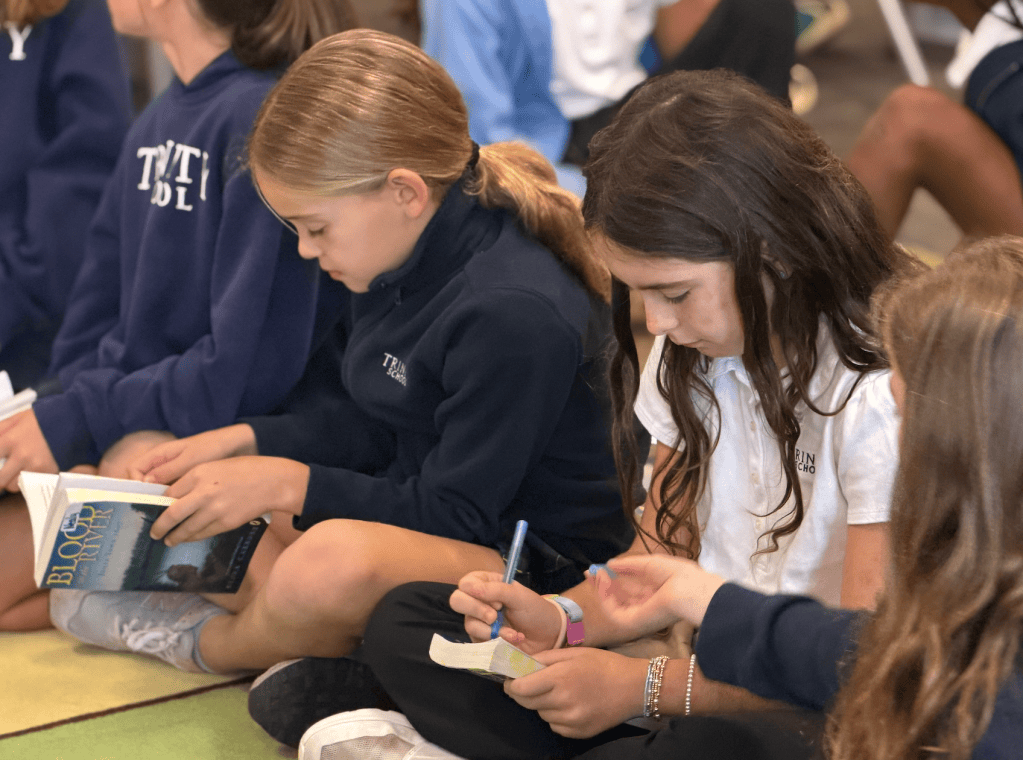
As Michele read, every student had a book in hand and eyes on the page. Students weren’t just listening to the story; they were reading it with her.
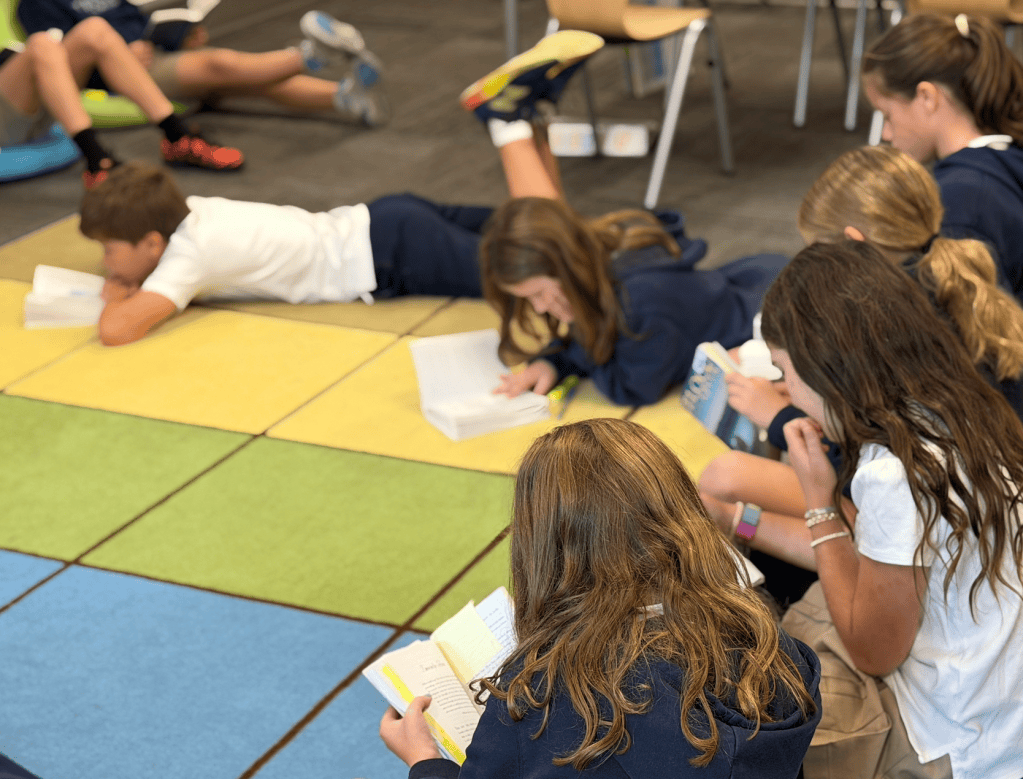
Along the way, Michele:
- Clarified words in context, like brash, and asked whether the beads the settlers called “New World diamonds” really were diamonds
- Modeled her own thinking as a reader: “I annotated a little heart there,” at the moment Samuel admits he will miss his rival
- Checked in with a quick “Everyone with me? Page 204?”
- Asked students to highlight Point Comfort and built the background they needed: three ships, a colony grown from about 160 to 500, a new site 30 miles down the river, and the reasons for the move
- Had the whole class say Algonquin together, so every student owned the word
When the theme “channel your anger” surfaced, Michele asked, When has this happened before? Students reached back across the book: the boat, the fight with James, the punch Samuel held back. Vocabulary, theme, and character were all woven together.
Turn and Talk, Then Share
Michele paused for partners to discuss a character’s choice: Why does Ann want to stay in Jamestown instead of going to Point Comfort?
“Back to me in 5…4…3…2…1.” Partnerships were spotlighted to share. When one student said he needed more think time, Michele said, “Got it,” and moved on. Think time was simply honored.
Then SD offered an inference that went well beyond the page: Ann thinks Point Comfort is dangerous, but what she doesn’t know is that the Native Americans already know where the settlers are.
The ones doing the talking are the ones learning.
A Turning Point Worth Waiting For
Michele named a reading habit as she read: exclamations in a plot are worth annotating, because the book is telling you something matters.
The chapter built to Samuel’s turning point. He is seething and wants to punch something. Then he breathes, hears Reverend Hunt’s voice reminding him to make decisions out of love and not fear, and lands on a new plan. The chapter ends on a line that had students leaning in: I’m about to steal a baby!
The focus question paid off. Students had been looking for evidence that Samuel had changed, and here it was.
Because, But, So
Next, partners reread the chapter together before writing a Because-But-So response:
Ann isn’t coming to Point Comfort because…
Michele focused students on so, the word that carries cause and effect. Sentence-level writing like this makes thinking visible. To finish so, a student has to understand what happens next and why.
As students finished writing, they moved on to a reflection on the back of their page or to an extension: a newscast crew writing scripts and recording short clips to share before the class finishes the book on Friday.
What Stuck With You?
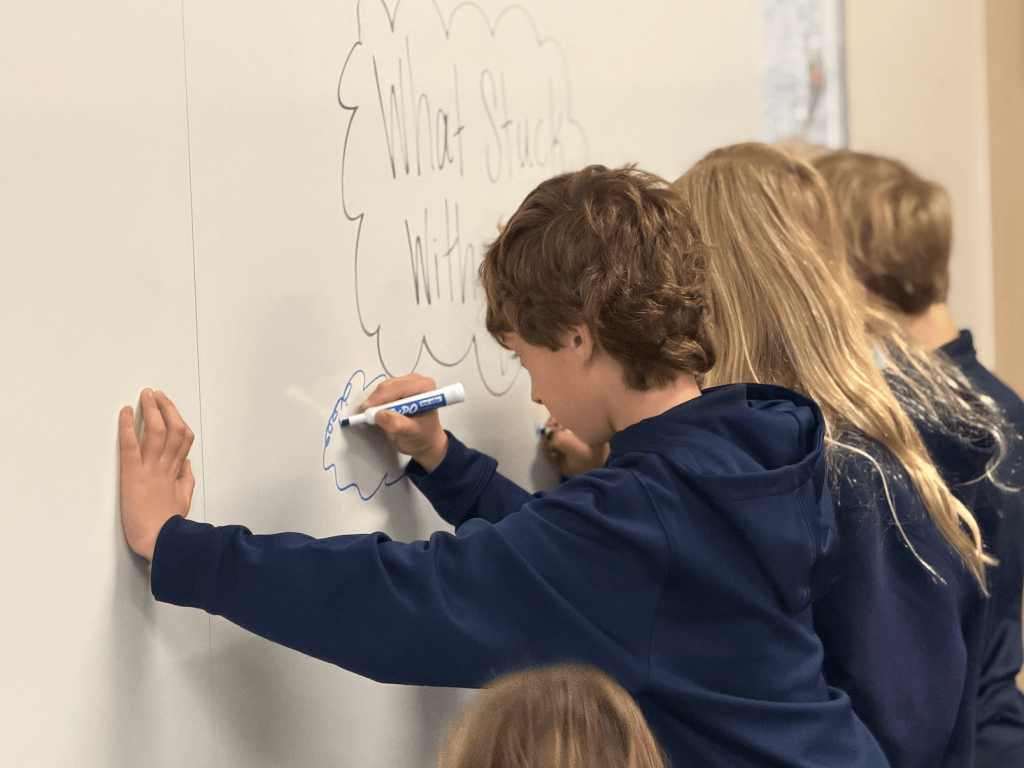
The block closed with students recording what stuck with them on a sticky note or with an Expo marker, then reflecting on their own learning with a self-assessment. Students were honest about where they were, which gives Michele exactly what she needs to plan the next lesson.
Wonderings for All of Us
Michele’s question about engagement and timing is one I hear from teachers in many grades. Watching her class, I left wondering:
- How long should our recap be? A timed turn-and-talk on “3 BIG moments,” followed by two or three shares, may give us most of the retrieval benefit and return minutes to the new chapter.
- Which stops matter most? On long-chapter days, what if we choose two anchor stops ahead of time, tied to the focus question, and let “pin it” questions wait?
- Does every student have a job while listening? A simple annotation symbol for the focus question (“Samuel has changed”) could keep every reader looking for evidence.
- How can partners borrow the teacher’s moves? The page check that worked so well for the whole class could become a partner habit, with one partner reading and the other tracking, switching pages.
Why It Works
This lesson pulls on many strands of Scarborough’s Reading Rope at once: vocabulary, background knowledge, language structures, and verbal reasoning. Words like authority, intricate, and brash were introduced, met in context, and tied to character, which is how lasting word knowledge is built. Students retrieved before reading, read with a purpose, talked before writing, and reflected at the end.
And underneath it all is a habit worth keeping: honor the question, and keep the story moving. Pin it, annotate it, and come back to it.
Thank you, Michele, for opening your classroom and for asking such a good question.

